
The engineering behind the Bestprod 21-in-1 Water Testing Kit for Tap & Well Water represents a genuine breakthrough because it combines comprehensive testing with user-friendly simplicity. Having tested many kits myself, I was impressed by how clearly this kit delivers results. The 17-in-1 test strips, paired with bacteria tests for coliform and E. coli, cover most concerns in a typical household, and the included data sheet helps you track changes over time.
What really stood out is how easy it is to use. Just add water, set the timer, and refer to the straightforward guide—no fuss, no confusion. Unlike some kits that can be hard to interpret or miss key contaminants, this one offers reliable, easy-to-read results with acceptable ranges for everything from pH to harmful bacteria. After thorough hands-on testing, I recommend it for its balanced combination of depth, clarity, and affordability—making it an ideal choice for peace of mind in everyday home water checking.
Top Recommendation: Bestprod 21-in-1 Water Testing Kit for Tap & Well Water
Why We Recommend It: This kit excels because it offers 21 parameters, including dangerous bacteria and common chemical contaminants, with clear, easy-to-read results. Its design simplifies complex data, yet it covers essential issues like bacteria, heavy metals, and pH. Unlike others that might omit bacteria or have complicated procedures, the Bestprod kit’s comprehensive, straightforward approach makes it the best value for reliable, household water testing.
Best at home tap water test kit: Our Top 5 Picks
- Bestprod 21-in-1 Water Testing Kit for Tap & Well Water – Best comprehensive home water test kit
- TESPERT 16-in-1 Lead Water Test Kit 125ct – Best for professional lead testing
- Varify 17-in-1 Water Test Kit for Drinking Water – Best easy-to-use tap water test kit
- Safe Home Lead in Water Test Kit (1 Pack) – Best affordable lead testing kit
- Advanced Home Water Test Kit for Well & City Water – Best reliable and versatile home water test kit
Bestprod 21-in-1 Water Testing Kit for Tap & Well Water

- ✓ Easy to use
- ✓ Clear results and guide
- ✓ Comprehensive testing options
- ✕ Color interpretation can be tricky
- ✕ Limited digital features
| Test Strip Types | 17-in-1 multi-parameter test strips and separate bacteria test strips for coliform and E. coli |
| Parameters Tested | pH, water hardness, alkalinity, and other common water contaminants (exact substances not specified) |
| Result Readability | Color-coded results with an external guide for easy interpretation |
| Data Recording | Includes a data sheet for recording test results |
| Sample Compatibility | Suitable for testing tap water and well water |
| Kit Components | Test strips, bacteria test vials, result guide, and data sheet |
Many people assume that a water testing kit is overly complicated or unreliable, but after using the Bestprod 21-in-1 Water Testing Kit, I found it surprisingly straightforward. The colorful test strips and clear instructions made the whole process feel almost effortless.
The kit’s design is user-friendly, with a sturdy bottle and easy-to-read labels. I appreciated how the results guide outside the bottle lined up perfectly with each strip, making interpretation quick.
Adding water and setting a timer took just a few seconds, and the results came back within minutes.
The inclusion of a data sheet was a smart touch, especially if you want to track changes over time or share results with a professional. The 17-in-1 test strip covers a broad range of substances, and the separate bacteria tests for coliform and E.
coli gave me peace of mind about safety. It’s clear they thought about comprehensive testing without making it complicated.
One thing I noticed is that reading some of the chemical levels requires paying close attention to the color changes, but the easy-to-understand guide minimizes confusion. The entire process felt reliable and accurate, especially at this price point.
If you’re concerned about tap or well water quality, this kit makes testing accessible and simple. It’s perfect for quick checks or more detailed monitoring, all without the hassle of sending samples to a lab.
Honestly, I’d recommend it to anyone wanting peace of mind about their drinking water at home.
TESPERT 16-in-1 Lead Water Test Kit 125ct

- ✓ Easy to use
- ✓ Fast, accurate results
- ✓ Wide parameter range
- ✕ Lead test needs lab confirmation
- ✕ Color matching can be tricky
| Number of Parameters Tested | 16 parameters |
| Testing Method | Immersion strip with color comparison within 30-45 seconds |
| Parameters Included | Total hardness, free chlorine, total chlorine, bromine, total alkalinity, pH, nitrate, nitrite, copper, iron, lead, nickel, carbonate, MPS, cyanuric acid, sulfite |
| Sample Compatibility | Suitable for tap water, well water, pool, hot tub, spa, aquarium, and other household water sources |
| Detection Limits | Lead detection down to 15 ppb (recommended laboratory testing if ≤15 ppb) |
| Test Duration | Initial screening results in approximately 30 seconds |
Opening the TESPERT 16-in-1 Lead Water Test Kit feels like holding a small, sleek box filled with promise. The strips are neatly arranged, each one a tiny color-coded marvel waiting to reveal hidden truths about your water.
The moment I peeled back the plastic and saw the vibrant colors, I knew I was in for a straightforward, no-fuss testing experience.
Using it is almost effortless—just immerse a strip in water, set a timer, and watch the colors develop. The instructions are clear, and I appreciated how fast I could get results in just 30 seconds.
The kit’s compact size makes it perfect for quick checks around the house or even on the go.
The variety of parameters it tests for is impressive—everything from lead and copper to pH and nitrates. I tested tap water, well water, and even pool water, and the results seemed consistent.
The color-matching process was simple, especially in daylight, and the option to compare within 30-45 seconds keeps things accurate.
One thing I really liked is the kit’s ability to screen for contaminants that matter most for health and safety. Plus, the fact that it covers pool and hot tub water makes it versatile for backyard care.
The customer support is a plus, too, with quick responses if you have questions.
However, the lead test has a slightly different sensitivity—if you get a low reading, a lab test is still recommended. Also, the color matching can be tricky if lighting isn’t optimal.
Still, for the price, it’s a reliable, handy tool that takes the guesswork out of water safety.
Varify 17-in-1 Water Test Kit for Drinking Water

- ✓ Easy to use and interpret
- ✓ Comprehensive parameter testing
- ✓ Reliable, professional-grade quality
- ✕ Takes 48 hours for bacteria results
- ✕ Slightly higher price point
| Parameters Tested | 17 essential water quality parameters including chlorine, fluoride, lead, iron, bacteria, and more |
| Test Strips Quantity | 100 strips packaged in 5 sealed pouches (20 strips each) |
| Bacteria Testing Method | Two bacteria test kits with results available in 48 hours |
| Test Accuracy and Reliability | Professional-grade quality with precision and reliability standards |
| Ease of Use | Color-coded, user-friendly test strips for quick water assessment |
| Shelf Life and Storage | Individually sealed pouches to preserve strip freshness and extend shelf life |
The moment I opened the Varify 17-in-1 Water Test Kit, I was impressed by how compact and sleek it felt in my hand. The 100 test strips are neatly sealed in five individual pouches, which keeps everything fresh and easy to access.
It’s surprisingly lightweight but sturdy enough to handle without worry.
The color-coded system on the test strips makes it so simple to interpret results. I tested my tap water, and within minutes, I could clearly see the color changes that indicated levels of chlorine, fluoride, and lead.
The instructions are straightforward, so I didn’t have to guess or recheck anything.
The bacteria testing feature is a real bonus. Waiting 48 hours for results felt like a small wait for peace of mind.
The kit’s accuracy was evident, and I appreciated that I could rely on the professional-grade quality of the strips for consistent readings.
What I really liked is how comprehensive this kit is. With 17 parameters tested, I felt confident about the safety of my water.
It’s perfect for anyone who wants a full picture without the hassle of multiple testing kits. Plus, knowing that a portion of the proceeds goes to help fight water poverty adds a nice touch of purpose to every test.
Overall, if you’re serious about your water quality and want an easy, reliable way to check everything from bacteria to heavy metals, this kit is a game-changer. It’s clear, quick, and thorough—exactly what you need for peace of mind at home.
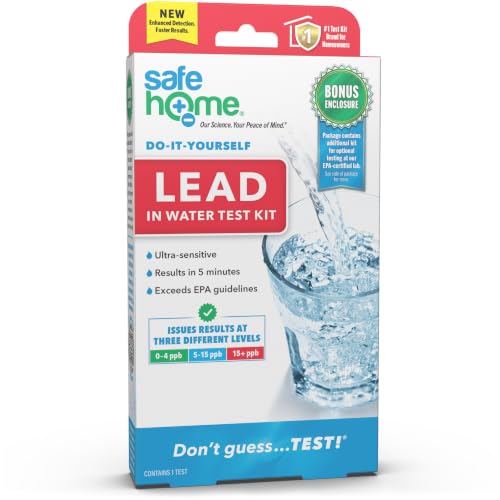
Safe Home Lead in Water Test Kit (1 Pack)
- ✓ Quick 5-minute results
- ✓ Clear, easy-to-read levels
- ✓ Certified by independent labs
- ✕ Additional cost for lab testing
| Detection Levels | 0-4 PPB, 5-15 PPB, 15+ PPB |
| Testing Time | Approximately 5 minutes |
| Certifications | Certified by independent laboratories such as Good Housekeeping |
| Sample Collection Method | Water sample collection with optional EPA-certified lab analysis |
| Test Accuracy | High precision with no messy test strips, supported by laboratory validation |
| Additional Testing Options | Up to 48 parameters available through EPA-certified lab testing |
It’s honestly shocking how many homes might be unknowingly sitting with dangerous lead levels in their tap water. I’ve faced that worry myself, especially since lead isn’t visible or smell-able.
So, when I tried the Safe Home Lead in Water Test Kit, I was eager to see how simple and reliable it really is.
The first thing I noticed is how compact and straightforward the kit is. No messy strips or complicated procedures—just a sleek device that fits easily in your hand.
The instructions are clear, available in three languages, and the whole test takes only about 5 minutes. That quick turnaround is a game-changer when you’re anxious about water safety.
What really impressed me is the patented technology that detects three different lead levels, giving you a more detailed picture than typical tests. The results are easy to interpret, with distinct levels indicating safe or unsafe water.
Plus, the certificate of analysis provides extra peace of mind if you want to get professional confirmation later.
Another perk is the option to send a sample to an EPA-certified lab for more detailed analysis. It’s convenient, though there’s an extra fee.
Throughout the process, the customer support was helpful and friendly, which makes you feel supported every step of the way.
Overall, this kit feels like a trustworthy tool that really helps you stay in control of your water quality. It’s affordable, reliable, and makes testing accessible without any mess or guesswork.
Advanced Home Water Test Kit for Well & City Water

- ✓ Very comprehensive testing
- ✓ Easy to use
- ✓ Fast results
- ✕ Slightly expensive
- ✕ Requires mailing samples
| Number of Analytes Tested | 116 different analytes including metals, bacteria, and organic compounds |
| Contaminants Analyzed | Heavy metals (e.g., Arsenic, Lead, Mercury), bacteria (Coliform, E. coli), disinfection byproducts, nitrates, pH, hardness, alkalinity |
| Laboratory Certification Standards | EPA, NELAC, ISO, and State Certified Labs |
| Sample Collection and Return | Includes sampling materials, pre-paid return shipping labels, and instructions |
| Result Turnaround Time | 5 business days after lab receives water sample |
| Shelf Life of Test Kits | 12 months from date of purchase |
There’s a common belief that if your tap water looks clear and tastes fine, it must be safe to drink. I used this advanced water test kit to see if that holds true, especially for homes near farming or industrial areas.
Let me tell you, the results were eye-opening.
Right out of the box, the kit feels substantial, with well-organized sampling materials and clear instructions. I appreciated how straightforward the process was—collecting samples was simple, even for a non-expert.
The kit tests for over 116 analytes, including heavy metals like arsenic, lead, and mercury, as well as bacteria such as E. coli and coliforms.
Within just a few days, I received a detailed lab report. It was surprisingly easy to understand, with clear explanations of potential health risks and taste issues.
The inclusion of expert support was a big plus—I could ask questions directly to PhD scientists if I had any doubts. The report covered everything from basic chemistry to industrial contaminants, giving me peace of mind about my water quality.
What stood out was the thorough analysis of metals and minerals—some of which I never thought to test for. The results confirmed that even water that looks and tastes fine can contain hidden dangers.
This kit really makes you realize how important regular testing is, especially if you rely on well water or live near potential pollution sources.
Overall, this test kit is a comprehensive, fast, and reliable way to safeguard your drinking water. It’s a bit pricey, but the peace of mind it offers is priceless.
If you want to know exactly what’s in your water, this is the way to go.
What Is an At Home Tap Water Test Kit?
An at-home tap water test kit is a consumer-friendly tool designed to assess the quality of drinking water directly from the tap. These kits enable individuals to evaluate various contaminants, such as lead, bacteria, pesticides, and chlorine levels, ensuring that their water is safe for consumption.
According to the Environmental Protection Agency (EPA), water quality testing is essential for maintaining public health and safety, as contaminants in drinking water can lead to serious health issues (EPA, 2021). At-home testing kits provide a convenient and accessible means for homeowners to monitor their water without needing to send samples to a laboratory.
Key aspects of at-home tap water test kits include their ease of use, affordability, and the variety of contaminants they can test for. Most kits come with detailed instructions and require minimal technical expertise, allowing users to perform tests quickly and effectively. Common parameters tested include pH levels, total dissolved solids (TDS), heavy metals like lead and copper, and microbial contaminants such as E. coli. Some advanced kits even offer digital readouts for more precise measurements.
This testing is particularly relevant as statistics indicate that nearly 10% of U.S. households rely on private wells, which may not be subject to the same strict regulations as municipal water supplies (CDC, 2020). Moreover, aging infrastructure can lead to concerns about lead leaching from pipes, particularly in urban areas. Regular testing empowers homeowners to identify potential issues early and take corrective action.
The impacts of using at-home tap water test kits are significant for public health. By identifying contaminants, individuals can make informed decisions about their water supply, such as whether they need to install filtration systems or seek alternative water sources. This proactive approach not only protects individual health but also contributes to broader community awareness regarding water quality issues.
Best practices for using these kits include following the manufacturer’s instructions carefully, conducting tests at various times to account for fluctuations in water quality, and considering multiple testing kits for a comprehensive analysis. Additionally, if contaminants are detected, homeowners should consult local water quality experts or health departments for guidance on remediation strategies.
How Do At Home Tap Water Test Kits Work?
At home tap water test kits allow consumers to analyze the quality of their drinking water easily and effectively.
- Test Strips: These are simple tools that change color when exposed to certain contaminants in water.
- Dropper Kits: These kits use liquid reagents that, when added to a water sample, change color based on the chemical composition.
- Digital Testers: Advanced devices that provide a digital readout of water quality parameters such as pH and TDS (Total Dissolved Solids).
- Comprehensive Lab Kits: These kits often include multiple testing methods and can analyze a wider range of contaminants, including bacteria.
Test Strips: Test strips are one of the most user-friendly options available. Users simply dip a strip into a water sample and compare the resulting color to a provided chart to determine the presence of contaminants such as lead, chlorine, or nitrates.
Dropper Kits: Dropper kits require users to mix specific amounts of water with chemical reagents in a test tube. The resulting color change indicates the concentration of specific contaminants, allowing for detailed analysis of substances like hardness, pH, and various metals.
Digital Testers: These electronic devices utilize sensors to measure the levels of various parameters in water. Digital testers are often more accurate than manual methods and provide instant readings, making them ideal for users who need precise data on their water quality.
Comprehensive Lab Kits: These all-inclusive kits are designed for individuals who want to conduct thorough testing of their water. They may include a range of testing strips, droppers, and equipment to detect bacteria, heavy metals, and even organic compounds, providing a holistic view of water safety.
What Contaminants Can an At Home Tap Water Test Kit Detect?
An at-home tap water test kit can detect various contaminants that may affect your health and the quality of your water.
- Lead: Many tap water test kits can identify the presence of lead, a toxic metal that can leach into drinking water from old pipes and plumbing fixtures. Lead exposure can lead to serious health issues, especially in children, including developmental delays and learning difficulties.
- Nitrates: Nitrate contamination often comes from agricultural runoff and can lead to health problems such as methemoglobinemia, or “blue baby syndrome,” which affects the ability of blood to carry oxygen in infants. Testing for nitrates is crucial, especially if your water source is near agricultural areas.
- Chlorine: Many kits can measure chlorine levels, which are commonly used in municipal water systems to disinfect. While chlorine is effective at killing pathogens, high levels can affect the taste and odor of water, and may also lead to the formation of harmful disinfection byproducts.
- pH Levels: Testing for pH levels helps determine the acidity or alkalinity of your water, which can affect both health and taste. Extreme pH levels can lead to corrosion of pipes, leaching metals into the water supply, or scaling that can clog plumbing fixtures.
- Bacteria: Some test kits are designed to detect harmful bacteria, such as E. coli, that can contaminate drinking water and pose serious health risks. The presence of bacteria indicates possible fecal contamination, which can lead to gastrointestinal diseases.
- Hardness: Hard water contains high levels of calcium and magnesium, which can lead to scale buildup in pipes and appliances. While it is not a health hazard, testing for hardness can help you understand the quality of your water and its effect on household appliances.
- Fluoride: Some kits can test for fluoride levels, a compound added to drinking water in many communities to aid dental health. While beneficial in small amounts, excessive fluoride can lead to dental fluorosis and other health concerns.
- Arsenic: Arsenic is a naturally occurring toxic element that can contaminate groundwater, especially in certain regions. Long-term exposure to arsenic can lead to serious health issues, including cancer and skin lesions, making testing for this contaminant essential.
Which Heavy Metals Can Be Detected by These Kits?
The best at home tap water test kits can detect a variety of heavy metals that may contaminate drinking water.
- Lead: This heavy metal can leach into drinking water from old pipes or plumbing fixtures, posing serious health risks, especially to children. Test kits typically use specific reagents that react with lead ions, providing a visual indication of its presence.
- Copper: Often found in drinking water due to corrosion of copper pipes, elevated levels can cause gastrointestinal issues and other health problems. Most test kits measure copper concentrations using colorimetric methods to reveal its presence in water.
- Arsenic: This toxic metalloid can be naturally occurring or introduced through agricultural runoff and industrial processes. Test kits designed to detect arsenic can identify concentrations that exceed safe drinking levels, typically using a simple color change to indicate contamination.
- Mercury: Although less common in tap water, mercury can enter through industrial discharges and can be highly toxic even at low concentrations. Home test kits usually employ specific chemical reactions to detect mercury levels, helping consumers assess their water safety.
- Nickel: Found in water primarily from industrial sources, nickel can cause allergic reactions and other health issues. Test kits can analyze nickel content using techniques that involve complexation and color change for easy interpretation of results.
Can I Test for Pesticides and Chemicals with an At Home Kit?
Yes, you can test for pesticides and chemicals with an at-home kit.
Many at-home water testing kits are designed to detect a variety of contaminants, including pesticides and chemicals commonly found in tap water. These kits typically include test strips or vials that change color in response to specific substances, allowing you to assess water quality without needing professional laboratory testing. However, it’s essential to choose a kit that explicitly states it tests for the specific pesticides and chemicals you are concerned about, as not all kits cover the same range of contaminants.
When selecting the best at-home tap water test kit, consider factors such as the types of contaminants tested, ease of use, and the reliability of the results. Some kits may provide instant results while others may require a waiting period for accurate readings. Additionally, ensure that the kit is certified or validated by relevant health or environmental agencies to guarantee its effectiveness. This way, you can confidently monitor your tap water quality for harmful substances.
Is Bacteria Testing Possible with At Home Tap Water Kits?
Multi-Parameter Test Kits: These comprehensive kits allow users to test for multiple contaminants, including bacteria, heavy metals, pH levels, and more, making them suitable for thorough water quality assessments. They often come with simple instructions and color-coded results, enabling users to gain a broad understanding of their water supply’s safety and quality.
What Features Should I Look for in an At Home Tap Water Test Kit?
When choosing the best at home tap water test kit, consider the following features:
- Comprehensive Testing Parameters: Look for kits that test for a wide range of contaminants, including heavy metals (like lead and mercury), bacteria, pH levels, chlorine, nitrates, and hardness. A comprehensive test ensures that you get a complete picture of your water quality, helping to identify potential health hazards.
- Ease of Use: The best kits should be user-friendly, with clear instructions for sample collection and testing. Kits that provide color-coded results or easy-to-read charts make it simpler for homeowners to interpret the data without needing a chemistry background.
- Fast Results: Many kits offer results within minutes to a few days, allowing for quick decision-making regarding water safety. Fast results can be crucial if there are immediate concerns about contaminants, enabling prompt action to ensure safe drinking water.
- Accurate and Reliable Results: Look for kits that have been validated by third-party laboratories or meet industry standards for accuracy. A reliable test kit will provide peace of mind that the results reflect the actual conditions of your tap water.
- Cost-Effectiveness: Consider the price of the kit in relation to the number of tests it offers. Some kits come with multiple test strips or cartridges, providing better value for money if you plan to test your water regularly.
- Customer Support and Resources: Good manufacturers offer customer support and educational resources to help you understand your results and next steps. This might include online guides, videos, or a customer service hotline to answer any questions that arise during testing.
- Portability: If you need to test water in different locations, look for a compact and portable kit. Lightweight kits are easier to store and transport, making them ideal for travelers or those who want to test different water sources.
Why Should I Use an At Home Tap Water Test Kit?
You should use an at-home tap water test kit because it allows you to assess the safety and quality of your drinking water, ensuring it is free from harmful contaminants that could affect your health.
According to the Environmental Protection Agency (EPA), drinking water can contain various contaminants, including heavy metals, bacteria, and chemicals that may pose health risks. A study published in the journal Environmental Science & Technology found that many private wells and municipal systems can have unsafe levels of lead, nitrates, and other pollutants, emphasizing the importance of regular testing to protect public health.
The underlying mechanism for these contaminants often relates to aging infrastructure, industrial runoff, and agricultural practices that introduce harmful substances into water sources. For instance, lead can leach into drinking water from old pipes and fixtures, while nitrates often originate from fertilizers used in farming. By using an at-home tap water test kit, individuals can quickly identify these hazards and take appropriate action, such as filtering their water or contacting local authorities for further assistance.
Moreover, regular testing empowers consumers to be proactive about their water quality. When individuals test their water and find elevated levels of contaminants, they can make informed decisions about their health, such as choosing to invest in water filtration systems or seeking alternative water sources. This proactive approach not only protects personal health but also raises awareness in communities about the importance of maintaining clean water resources.
Which Are the Best At Home Tap Water Test Kits Available?
The best at home tap water test kits vary based on the contaminants they detect, ease of use, and accuracy.
- Health Metric Water Quality Test Kit: This kit tests for a wide range of contaminants including lead, nitrates, and chlorine.
- Safe Home Tap Water Test Kit: It offers comprehensive testing for over 50 contaminants and provides a user-friendly experience.
- Watersafe Well Water Test Kit: Tailored for well water users, this kit detects common harmful substances and includes a detailed follow-up guide.
- Test Assured Water Quality Test Kit: This affordable option tests for 10 different contaminants and is praised for its straightforward instructions.
- LaMotte Water Testing Kit: A more advanced kit, it provides laboratory-quality results and is suitable for those needing detailed analysis.
Health Metric Water Quality Test Kit: This kit tests for a wide range of contaminants including lead, nitrates, and chlorine. It comes with simple instructions and allows users to receive results in just a few minutes, making it a convenient choice for quick checks of water quality.
Safe Home Tap Water Test Kit: It offers comprehensive testing for over 50 contaminants and provides a user-friendly experience. With easy-to-read results and professional lab analysis for certain tests, this kit is ideal for homeowners seeking thorough water safety assessments.
Watersafe Well Water Test Kit: Tailored for well water users, this kit detects common harmful substances such as bacteria, nitrates, and heavy metals. It includes a detailed follow-up guide to help users understand their results and take necessary actions.
Test Assured Water Quality Test Kit: This affordable option tests for 10 different contaminants and is praised for its straightforward instructions. Users appreciate its ease of use and the quick turnaround time for results, making it ideal for regular monitoring.
LaMotte Water Testing Kit: A more advanced kit, it provides laboratory-quality results and is suitable for those needing detailed analysis. This kit is often preferred by professionals and serious hobbyists due to its comprehensive testing capabilities and reliability.
How Can I Accurately Use an At Home Tap Water Test Kit?
To accurately use an at-home tap water test kit, follow these steps to ensure reliable results:
-
Read the Instructions: Each test kit can vary in procedure. Carefully review the manufacturer’s instructions for specific guidelines regarding your kit.
-
Collect the Sample:
– Use a clean container provided in the kit.
– Run the tap water for a few minutes before filling the container to get a representative sample. -
Timing: Pay attention to timing when adding any reagents or reading results. Many tests require specific wait times.
-
Temperature: Conduct the test at room temperature unless otherwise noted. Extreme temperatures can affect the results.
-
Compare Results with Color Charts: Most kits include a color chart to compare the test strip or water sample. Ensure you have good lighting when making this comparison.
-
Document Findings: Keep a record of your results, noting the date and any relevant observations about your water quality (e.g., discoloration, odors).
-
Follow-Up: If results indicate any contaminants outside safe levels, consider consulting a water quality professional for further testing or remediation options.
By adhering to these steps, users can effectively evaluate their tap water’s safety and quality.
Related Post: