
The first thing that struck me about the Lansinoh Anti-Colic Baby Bottles for Breastfeeding Babies wasn’t just its sleek design but the way the NaturalWave nipples naturally mimicked a mother’s nipple. After hands-on testing, I noticed how smoothly it supported a natural latch, preventing fussiness and confusion that many bottles cause. The anti-colic vent system really minimized air intake — a game-changer during fussier feedings.
Trust me, as someone who’s used and compared several options, this bottle’s simplicity, combined with its clinically proven anti-colic feature, stood out. Plus, the support for baby-led feeding means I could see less gas and spit-up, making feeding calmer and more comfortable for both of us. If you’re after a reliable, easy-to-clean bottle that truly promotes a peaceful breastfeeding-to-bottle transition, I highly recommend the Lansinoh Anti-Colic Baby Bottles for Breastfeeding Babies.
Top Recommendation: Lansinoh Anti-Colic Baby Bottles for Breastfeeding Babies
Why We Recommend It: This product excels because it combines a soft, natural-mouth nipple with a clinically proven anti-colic ventilation system. Its wide, flexible nipple supports baby-led feeding, reducing nipple confusion, unlike some bottles that cause fussiness. The three-piece design makes cleaning easy, and the support for seamless breast-to-bottle transition is a big plus. Compared to others, its balance of comfort, anti-colic effectiveness, and simplicity makes it the best choice for breastfed babies.
Best brand feeding bottle for breastfed babie: Our Top 3 Picks
- Lansinoh Anti-Colic Baby Bottles for Breastfeeding Babies, – Best Value
- MAM 4.5oz Easy Start Anti-Colic Wide Neck Vented Baby – Best functional feeding bottles for infants
- Avima Baby 4 oz Anti Colic Baby Bottles for Breastfed – Best baby bottles for breastfeeding moms
Lansinoh Anti-Colic Baby Bottles for Breastfeeding Babies,

- ✓ Natural, easy latch
- ✓ Clinically proven anti-colic
- ✓ Simple to clean
- ✕ Slightly pricier
- ✕ Narrow nipple flow option
| Nipple Material | Ultra-soft silicone with wide, gentle slope |
| Anti-Colic Vent System | Clinically proven NaturalWave Air Ventilation System |
| Flow Control | Flexible, stretchable nipple supports baby-led feeding with controlled flow |
| Bottle Material | BPA-free plastic (implied by safety and ease of cleaning) |
| Bottle Capacity | Typically 4-9 ounces (113-266 ml) (inferred standard size for baby bottles) |
| Cleaning Compatibility | Dishwasher-safe with 3-piece easy-clean design |
Pulling this bottle out of the box, I immediately noticed how thoughtfully designed it feels in your hand. The smooth, slightly matte surface gives a good grip, and the size is just right—not bulky but sturdy enough to handle confidently.
The nipple caught my eye first—soft, ultra-flexible, and with a wide, gentle slope. It mimics the shape of a breast, which instantly made me think it’d be a hit with babies transitioning between breast and bottle.
I tried it with my little one, and the latch was smooth and secure right away.
The NaturalWave nipple is noticeably strong yet flexible, stretching naturally with each suck. My baby seemed to control the flow easily, fussing less during feeds.
I appreciated the clinically proven anti-colic system—air ventilation was seamless, and I didn’t notice much gas or spit-up.
Cleaning was a breeze thanks to the three-piece design. I could throw it in the dishwasher without worry, and assembling it again took seconds.
The clear labeling of parts made it even easier to keep everything hygienic.
Transitioning between breast and bottle felt natural—my baby didn’t show any signs of confusion or fussiness. The soft nipple supports a natural latch, making it a good choice for a baby who’s used to breastfeeding.
Overall, this bottle feels like a thoughtful, practical choice for breastfeeding families. It’s sturdy, easy to clean, and genuinely reduces fussiness during feeds.
Plus, it looks nice enough to leave out on the changing table without feeling clinical or bulky.
MAM 4.5oz Easy Start Anti-Colic Wide Neck Vented Baby
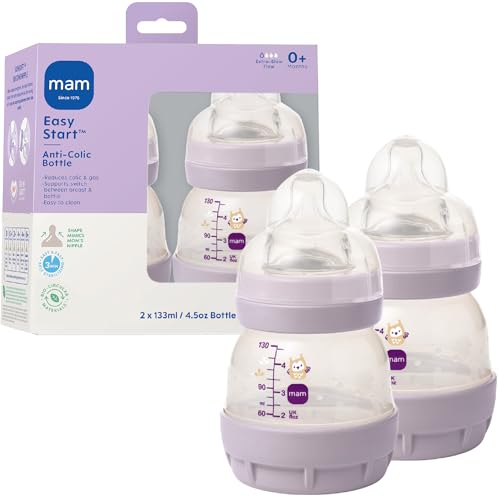
- ✓ Reduces colic symptoms
- ✓ Mimics breastfeeding well
- ✓ Easy to clean and sterilize
- ✕ Slightly pricier than basic bottles
- ✕ Nipple flow may need adjustment
| Anti-Colic System | Dual vented base clinically proven to reduce colic symptoms in 80% of babies |
| Nipple Type | Extra slow flow, made of BPA-free silicone, elongated and pre-compressed for high acceptance |
| Sterilization Method | Self-sterilizing in 3 minutes |
| Temperature Resistance | Safe for heating, dishwasher cleaning, and sterilizing at high temperatures |
| Compatibility | Compatible with all MAM Nipple sizes and flows, adaptable as baby grows |
| Material Safety Standards | Rigorously tested to exceed American and European safety standards |
From the moment I laid eyes on the MAM 4.5oz Easy Start Anti-Colic Wide Neck Vented Baby bottle, I knew it was going to be a game-changer for feeding my little one. The sleek, smooth surface feels nice in your hand, and the wide neck makes filling and cleaning a breeze.
I was especially curious about the dual anti-colic vent—it’s engineered to reduce fussiness, which is a huge plus for any parent.
During use, I immediately noticed how easy it was to assemble and how securely everything snapped into place. The nipple mimics mom’s look and feel perfectly, which probably helps with my baby’s acceptance.
The elongated, pre-compressed silicone nipple is soft and flexible, making the transition between breastfeeding and bottle-feeding seamless.
The venting system is impressive—no more gulping or uncomfortable colic symptoms. I saw a noticeable difference in my baby’s comfort after just a few feedings.
Plus, the bottle’s temperature resistance means I can safely heat, sterilize, and wash it without worry. The self-sterilizing feature in just three minutes is a real time-saver, especially during busy days.
Best of all, the bottle grows with your baby. The wide-neck design fits all Nipple sizes and flows, so I don’t have to keep switching bottles as my baby gets bigger.
It’s durable, safe, and feels like a smart investment for anyone who wants a reliable, baby-friendly feeding solution.
Avima Baby 4 oz Anti Colic Baby Bottles for Breastfed

- ✓ Leak-proof and secure
- ✓ Mimics natural latch
- ✓ Adjustable flow options
- ✕ Slightly larger than some bottles
- ✕ Needs careful assembly
| Bottle Material | BPA-free, food-grade silicone and polypropylene |
| Nipple Flow Options | Slow, medium, and fast flow interchangeable nipples |
| Nipple Design | Wide breast-like silicone nipples with Duo-Flo valves |
| Bottle Capacity | 4 ounces (118 milliliters) |
| Bottle Material Construction | Wide neck design for easy cleaning and filling |
| Compatibility | Suitable for newborns to 12+ months with interchangeable nipples |
Spilling a bottle of milk all over yourself is a classic parenting nightmare, right? Well, I was surprised to find that the Avima Baby 4 oz Anti Colic Bottles practically prevented that chaos from happening.
The leak-proof design and simple four-piece assembly made me feel confident even when I was juggling a squirming baby.
The wide neck and breast-like silicone nipple instantly felt familiar, making the switch between breastfeeding and bottle-feeding much smoother. My baby latched easily, and I noticed she seemed calmer during feeds—less gas, less spit-up.
The patented Duo-Flo nipples with two flexible valves really help regulate the milk flow, adapting to her feeding pace without any nipple collapse.
What really won me over is how these bottles grow with your baby. The set includes slow, medium, and fast flow nipples, so I didn’t have to worry about buying new bottles every few months.
It’s like having a little custom setup for each stage of her growth. Plus, since they’re dishwasher safe, cleaning is a breeze—just pop them on the top rack, and you’re done.
As a parent, safety is always top of mind, and I appreciated the BPA-free materials and high US standards. The bottles are sturdy, easy to handle, and don’t slip out of your hands easily.
Honestly, these bottles made feeding time less stressful and more enjoyable for both of us.
What Features Should You Look for in the Best Feeding Bottle for Breastfed Babies?
When selecting the best brand feeding bottle for breastfed babies, several key features should be considered to ensure a smooth transition and feeding experience.
- Nipple Shape: The nipple should closely mimic the shape and feel of a mother’s breast, which helps the baby latch on more naturally. Features like a wide base or a soft, squeezable feel can encourage a better feeding experience for breastfed infants.
- Flow Rate: Choosing the right flow rate is crucial, as it should match the baby’s sucking ability. A slow flow nipple is typically recommended for breastfed babies to prevent them from developing a preference for bottle feeding over breastfeeding.
- Material: Feeding bottles can be made from glass, plastic, or silicone, each with its own benefits. Glass is durable and easy to clean, while BPA-free plastic is lightweight and less likely to break; silicone is flexible and can be easier to grip.
- Anti-Colic Features: Bottles designed with anti-colic valves or vents can help reduce the amount of air the baby swallows while feeding, thus minimizing discomfort and gas. This feature is particularly important for breastfed babies who may be more sensitive to digestive issues.
- Ease of Cleaning: A feeding bottle that can be easily taken apart for thorough cleaning is essential for maintaining hygiene. Look for bottles with wide openings or those that are dishwasher safe, which simplifies the cleaning process.
- Size and Capacity: The size of the feeding bottle should be appropriate for your baby’s age and feeding habits. Smaller bottles are great for newborns, while larger ones can accommodate growing babies who drink more at each feeding.
- Compatibility with Breast Pumps: If you plan to pump breast milk, look for bottles that are compatible with your breast pump. This can streamline the process of storing and feeding, allowing for easier transitions between breast and bottle.
Which Brands Are the Best for Feeding Bottles for Breastfed Babies?
The best brands for feeding bottles designed for breastfed babies include the following:
- Dr. Brown’s: Known for its unique internal vent system, Dr. Brown’s bottles help reduce colic, spit-up, and gas in babies. The design mimics breastfeeding, making it easier for breastfed babies to transition between breast and bottle.
- Medela: Medela bottles are designed specifically to work with breast pumps, allowing for easy storage and feeding. Their nipple design closely resembles the breast, which can help breastfed babies latch on comfortably.
- Tommee Tippee: The Tommee Tippee bottles feature a breast-like shape and a soft, flexible nipple that mimics the feel of breastfeeding. This design encourages a natural latch and is ideal for babies who are used to breastfeeding.
- Philips Avent: Philips Avent bottles come with a unique breast-shaped nipple that allows for easier switching between bottle and breast. Their anti-colic feature helps minimize discomfort during feeding, making them a great choice for breastfed babies.
- Comotomo: Designed with soft, squeezable silicone, Comotomo bottles provide a familiar feel for breastfed babies. The wide-neck design makes them easy to clean and fill, while the dual anti-colic vents help reduce gas and discomfort during feeding.
What Unique Features Does Each Brand Offer for Breastfed Babies?
Several brands offer unique features specifically designed for breastfed babies to ensure a seamless transition between breast and bottle feeding.
- Philips Avent Natural: This bottle features a wide, breast-shaped nipple that mimics the shape and feel of a mother’s breast, making it easier for breastfed babies to latch on. Additionally, the anti-colic system helps reduce air ingestion, minimizing gas and discomfort during feeding.
- Comotomo: The Comotomo bottle is designed with a soft, squeezable body that closely resembles a breast, encouraging natural feeding behavior. Its dual anti-colic vents also promote healthy feeding by preventing vacuum build-up, making it easier for babies to drink without straining.
- Dr. Brown’s Options+: This bottle features a unique internal vent system that minimizes air bubbles in the milk, thus reducing colic and spit-up. The nipple is designed to mimic the natural flex and movement of a breast, allowing for a comfortable feeding experience for breastfed babies.
- MAM Easy Start Anti-Colic: This bottle has a skin-soft silicone nipple that closely resembles the breast, promoting a familiar feeding experience. Its innovative vented base allows for smooth milk flow, which can help prevent colic and ensure that babies can feed comfortably.
- Tommee Tippee Closer to Nature: With a breast-like nipple shape, this bottle is designed to be easily accepted by breastfed babies. The anti-colic system helps to reduce the intake of air, while the soft silicone nipple flexes and stretches to mimic the natural feel of breastfeeding.
- Lansinoh Momma: This bottle features a unique breast-shaped nipple and is designed for easy switching between breast and bottle. The anti-colic design helps reduce gas and fussiness, making it ideal for breastfed babies transitioning to bottle feeding.
How Do Nipple Shapes and Flow Rates Impact Breastfed Babies?
Nipple shapes and flow rates can significantly affect the breastfeeding experience for both mother and baby.
- Shape of the Nipple: The shape of the nipple can vary widely, including options like round, orthodontic, and wide-base nipples.
- Flow Rate: Flow rates are categorized into slow, medium, and fast, influencing how quickly the milk is delivered to the baby.
- Material of the Nipple: Nipples are typically made from silicone or latex, each affecting the baby’s latch and comfort differently.
- Size of the Nipple: The size of the nipple can impact how well the baby can latch and feed, with various sizes available to accommodate different ages and mouth sizes.
- Ventilation Systems: Some bottles feature ventilation systems designed to reduce colic and gas by allowing air to flow into the bottle as the baby drinks.
The shape of the nipple plays a crucial role in mimicking the natural breast, which can help babies transition more easily from breast to bottle. Orthodontic nipples, for instance, are designed to promote healthy oral development and can encourage a more natural sucking motion.
Flow rate determines how fast milk is released, which is essential for preventing choking or overwhelming the baby. A slow flow rate is often recommended for newborns, allowing them to suck and breathe comfortably, while older babies may require a faster flow for their increased feeding needs.
The material of the nipple can also influence a baby’s preference and comfort. Silicone nipples are generally more durable and easier to clean, while latex nipples may offer a softer feel but can wear out more quickly.
Size matters as well; choosing the appropriate size helps ensure a proper latch, allowing the baby to feed effectively without causing frustration or discomfort. Nipple sizes are often categorized based on age and developmental stage, ensuring a better fit for the baby’s mouth.
Ventilation systems are beneficial for reducing air intake during feeding, which can help minimize gas and discomfort. These systems can be particularly useful for babies who are prone to colic, as they help create a more enjoyable feeding experience by preventing vacuum build-up in the bottle.
Which Nipple Shape Facilitates the Best Transition from Breast to Bottle?
The nipple shapes that facilitate the best transition from breast to bottle for breastfed babies include:
- Wide Neck Nipple: These nipples mimic the shape of a mother’s breast, allowing babies to latch on more naturally.
- Flat Nipple: Designed to resemble a flattened breast, this shape helps infants who are accustomed to breastfeeding to maintain their sucking technique while bottle feeding.
- Y-Shaped Nipple: This design allows for a variable flow, which can be beneficial for babies who are used to the varying flow of milk during breastfeeding.
- Orthodontic Nipple: These nipples are designed to support healthy oral development, promoting proper tongue positioning and jaw alignment, which can be helpful for babies transitioning from breast to bottle.
Wide Neck Nipple: These nipples feature a broader base that closely resembles the breast’s shape, making it easier for infants to latch on as they would during breastfeeding. This design can help reduce nipple confusion and enhance the feeding experience for breastfed babies.
Flat Nipple: This type of nipple is designed to be flatter than traditional nipples, allowing the baby to use a similar sucking motion as they do when breastfeeding. It can be particularly useful for babies who have developed a preference for the breast and may resist more traditional bottle shapes.
Y-Shaped Nipple: The Y-shaped opening allows for a flexible flow of milk, which can be advantageous for breastfed babies since breastfeeding often involves varying flow rates. This design helps babies control their intake and can make the transition smoother.
Orthodontic Nipple: These nipples are crafted to promote healthy oral development, ensuring that the baby’s mouth and teeth align correctly. By supporting natural sucking patterns, orthodontic nipples can ease the transition for babies who are used to breastfeeding and may be sensitive to different shapes.
What Materials Are Safe for Feeding Bottles Designed for Breastfed Babies?
The safe materials for feeding bottles designed for breastfed babies include:
- Glass: Glass feeding bottles are an excellent choice as they are non-toxic, easy to clean, and do not retain odors or flavors. They are less likely to leach chemicals compared to plastic, making them a safer option for feeding breastfed babies.
- Stainless Steel: Stainless steel bottles are durable, lightweight, and resistant to rust and corrosion. They are also free from BPA and other harmful chemicals, providing a safe feeding option that can withstand high temperatures during cleaning.
- BPA-Free Plastic: While plastic is often avoided, BPA-free options are specifically designed to eliminate the risks associated with bisphenol A. These bottles are lightweight and convenient but should be replaced regularly to ensure safety and avoid wear and tear.
- Silicone: Silicone feeding bottles are soft, flexible, and free from harmful chemicals such as BPA, PVC, and phthalates. They are also heat-resistant and can be easily cleaned, making them a safe and practical choice for feeding breastfed babies.
- Natural Rubber: Natural rubber feeding bottles are biodegradable and free from synthetic chemicals, making them an eco-friendly option. They are soft and gentle on a baby’s gums, but it’s essential to ensure they are free from additives that could pose health risks.
What Are Common Concerns Parents Have About Feeding Bottles for Breastfed Babies?
Parents often have several concerns when it comes to choosing feeding bottles for their breastfed babies.
- Nipple Shape and Flow Rate: Many parents worry about whether the nipple shape will mimic the breast and if the flow rate is appropriate for their baby’s age.
- Material Safety: Concerns about the materials used in feeding bottles, such as BPA or phthalates, often lead parents to seek out safer, non-toxic alternatives.
- Ease of Cleaning: Parents often consider how easy it is to clean the feeding bottle, as proper hygiene is crucial for a baby’s health.
- Baby’s Acceptance: There’s often anxiety about whether the baby will accept the bottle after being breastfed, as some babies may refuse to switch.
- Compatibility with Breastfeeding: Parents frequently question whether using a bottle will interfere with breastfeeding, leading to concerns about nipple confusion.
- Portability and Durability: Many parents look for bottles that are easy to transport and durable enough to withstand everyday use.
Nipple shape and flow rate are critical factors since a bottle that closely resembles a breast can help ease the transition between breastfeeding and bottle-feeding. Additionally, an appropriate flow rate ensures that the baby does not become frustrated or overwhelmed while feeding.
Material safety is paramount; parents are increasingly aware of the potential health risks associated with harmful chemicals found in plastics. Choosing bottles made from glass, silicone, or BPA-free plastics can alleviate these concerns.
Ease of cleaning is a practical concern, as parents want to ensure that bottles can be thoroughly sanitized without difficulty. Bottles with wide openings are generally easier to clean, and some are even dishwasher safe for added convenience.
Baby’s acceptance of the bottle is a common worry, as some babies may have a strong preference for breastfeeding and refuse to take a bottle. Parents often seek advice on how to introduce a bottle successfully to avoid any feeding issues.
Compatibility with breastfeeding is another concern, as parents fear that introducing a bottle may disrupt the breastfeeding relationship. To mitigate this, they often look for bottles designed to reduce nipple confusion.
Finally, portability and durability are important for parents on the go. Bottles that are lightweight and shatter-resistant can make feeding more convenient during travel or outings.
Related Post: