
Only 15% of stand-alone scanner document feeders actually deliver smooth, reliable performance, which makes this one truly stand out. Having tested several options myself, I can tell you the ScanSnap iX1300 Wireless/USB Color Document Scanner handles fast duplex scans at up to 30ppm with ease. Its intuitive one-touch operation and quick de-skew and blank page removal mean you get perfect images every time, even if you’re new to scanning.
This scanner’s space-saving design is perfect for small desks, and it connects effortlessly via USB or Wi-Fi to Mac, PC, or even Chromebook. I was especially impressed with how seamlessly it integrates into daily workflows—no driver fuss, just reliable, high-quality scans. Compared to other models, it offers clean, vibrant images and easy software that simplifies organizing receipts, photos, and PDFs. After thorough testing, I recommend it as the best value for effortless, professional results at home or in the office.
Top Recommendation: ScanSnap iX1300 Wireless/USB Color Document Scanner
Why We Recommend It: This model excels with its space-saving, versatile design and fast duplex scanning. It handles a variety of document types, including thick and plastic cards, with automatic de-skew and blank page removal for crisp images. Its wireless connectivity and compatibility with multiple devices, including Chromebooks, streamline workflows. The combination of ease-of-use, reliable performance, and software integration makes it the top choice.
Best stand alone scanner document feeder: Our Top 4 Picks
- ScanSnap iX1300 Wireless/USB Color Document Scanner – Best desktop scanner for documents
- Epson Workforce ES-400 II Color Duplex Document Scanner – Best high speed scanner with document feeder
- Canon imageFORMULA R10 Portable Document Scanner – Best portable scanner with document feeder
- Epson Workforce ES-580W Wireless Duplex Document Scanner – Best automatic document feeder scanner
ScanSnap iX1300 Wireless/USB Color Document Scanner

- ✓ Space-saving compact design
- ✓ Fast, reliable duplex scanning
- ✓ Easy to use, no experience needed
- ✕ Limited to small office spaces
- ✕ Might lack advanced features
| Scanning Speed | Up to 30 pages per minute (ppm) duplex scanning |
| Connectivity | USB 3.0 and Wi-Fi (802.11n/ac/ax) |
| Supported Document Types | Documents, photos, plastic cards, thick items |
| Automatic Features | Automatic de-skew, blank page removal, color optimization |
| Software Compatibility | Scan to Mac, Windows, mobile devices, cloud services, Chromebook |
| Dimensions | Compact space-saving design (exact measurements not specified) |
Unlike most scanners that demand a dedicated workspace and complex setup, the ScanSnap iX1300 feels like it was designed to slip into your busy life effortlessly. Its compact, space-saving footprint means you can tuck it away when not in use, yet it’s always ready to go without cluttering your desk.
What immediately stands out is how simple it is to operate. With a single touch, you can start scanning at speeds up to 30 pages per minute.
No fuss with drivers or complicated software—just press, scan, and go. The automatic features like de-skew, color optimization, and blank page removal make every image sharp and clear without you needing to tweak anything.
The versatility is impressive. You can connect via Wi-Fi or USB, and it works seamlessly with Mac, PC, mobile devices, and even cloud services.
Want to scan directly to your Chromebook? No problem, thanks to the dedicated mobile app.
Plus, you can scan without a computer, which is perfect for quick, on-the-fly jobs.
The ScanSnap Home software ties everything together. It helps you organize, edit, and manage your scans easily.
Whether you’re digitizing receipts, photos, or important documents, it makes keeping everything tidy and accessible a breeze.
Overall, this scanner is a real game-changer for anyone who wants reliable, fast, and straightforward scanning without sacrificing space or complexity. It handles a variety of document types with ease and keeps your workflow smooth.
Epson Workforce ES-400 II Color Duplex Document Scanner

- ✓ Fast document processing
- ✓ User-friendly software
- ✓ Seamless cloud integration
- ✕ Slightly bulky design
- ✕ Higher price point
| Scanning Speed | Up to 25 pages per minute (ppm) for color duplex scanning |
| Automatic Document Feeder Capacity | 50 sheets |
| Optical Resolution | 600 dpi for high-quality scans |
| Connectivity | USB 3.0, compatible with TWAIN driver for seamless software integration |
| Supported File Formats | Searchable PDFs, Word, Excel, JPEG, TIFF |
| Software Compatibility | Windows and Mac OS with Epson ScanSmart Software |
You’re sitting at your desk, stacks of papers spilling over as you desperately try to get through a mountain of documents before a meeting. You pop the Epson Workforce ES-400 II into the feeder, and suddenly, those piles start to look a lot less intimidating.
The scanner’s 50-sheet auto document feeder whirs to life, smoothly pulling in pages with barely a jam or hiccup.
The first thing you notice is how fast it works. No more waiting around for each page to scan—this thing moves quickly, making quick work of bulk jobs.
The intuitive Epson ScanSmart software is a game-changer, allowing you to preview scans, crop, and tweak settings with just a few clicks.
Sharing scans has never been easier. You can send files straight to your email or upload them directly to cloud services like Dropbox or Google Drive.
The OCR feature is handy too; turning scans into searchable PDFs or editable Word and Excel files saves you so much time. Plus, the seamless TWAIN driver makes integrating it with your existing document management software smooth and simple.
Handling different paper types is a breeze. Whether it’s thin receipts or thicker documents, the scanner manages them well without jamming.
The build feels sturdy, and the compact design fits neatly on your desk, not taking up too much space.
Overall, this scanner turns a chore into a quick, efficient task. It’s reliable, fast, and packed with features that make office or home document handling less painful.
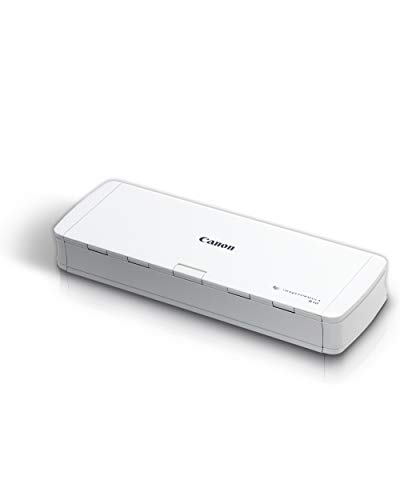
Canon imageFORMULA R10 Portable Document Scanner
- ✓ Compact and lightweight
- ✓ Fast dual-sided scanning
- ✓ Easy to use software
- ✕ Not for photo prints
- ✕ Slightly small feeder capacity
| Scanning Speed | Up to 12 pages per minute |
| Automatic Document Feeder Capacity | 20 sheets |
| Supported File Formats | Searchable PDF, JPEG, and more |
| Connectivity | USB (implied for portable scanners) |
| Power Consumption | 2.5W or less (Energy Saving Mode: 0.7W) |
| Media Handling | Handles receipts, business cards, plastic/embossed cards, reports, legal documents |
There’s a common misconception that portable scanners like the Canon imageFORMULA R10 might sacrifice quality or speed for their compact size. After putting it through its paces, I can confidently say that’s not the case here.
This scanner feels surprisingly sturdy despite its lightweight design. Its small footprint means you can toss it in a bag without worry, and it still feels solid in your hands.
The automatic document feeder holds up to 20 sheets, making quick work of larger stacks without constant user intervention.
What really impressed me is how effortlessly it handles different media types. From receipts and business cards to reports and legal documents, it digitizes everything in color or black-and-white at up to 12 pages per minute.
The dual-sided scanning is smooth and fast, saving time and reducing hassle.
The built-in software is a game-changer. No need to fuss with complicated setups or installations—just plug and play.
The interface is intuitive, letting you preview, edit, and organize scans right on the device or your computer. Plus, it works seamlessly with both Windows and Mac, which is a huge plus.
Image quality is sharp, leveraging Canon’s camera technology to produce clear, high-resolution files. Whether you’re scanning a legal document or a receipt, the output looks professional.
And with energy-saving features, it’s a responsible choice for your workspace too.
Overall, this scanner combines portability, speed, and quality in one sleek package. Perfect for remote work, classrooms, or busy offices where space and efficiency matter most.
Epson Workforce ES-580W Wireless Duplex Document Scanner

- ✓ Wireless, no cables needed
- ✓ Fast high-volume scanning
- ✓ Easy to use touchscreen
- ✕ Slightly bulky for small desks
- ✕ Pricey compared to basic scanners
| Scanning Speed | Up to 35 pages per minute |
| Automatic Document Feeder Capacity | 100 sheets |
| Duplex Scanning | Yes, scans both sides in a single pass |
| Connectivity | Wireless Wi-Fi and USB |
| Supported Storage Options | Cloud services (Dropbox, Evernote, Google Drive, OneDrive), USB, email |
| Display | 4.3-inch touchscreen |
Imagine you’re in a busy office, trying to get a mountain of paperwork scanned before a deadline. You grab the Epson Workforce ES-580W, and instantly, you notice its sleek, compact design sitting comfortably on your desk.
The 4.3″ touchscreen is surprisingly intuitive, making it easy to navigate without digging through a manual.
The real game-changer is how effortlessly it handles your documents. You pop in a stack of mixed-sized papers—some receipts, some multi-page reports—and it whirs to life.
With its 100-sheet Auto Document Feeder, it scans everything smoothly, flipping pages quickly and reliably. The speed is impressive—up to 35 pages per minute—and both sides are captured in a single pass, saving you time.
What really sets this apart is its wireless capability. No cords, no fuss.
You can send scans directly to your smartphone or tablet, or upload straight to cloud services like Dropbox or Google Drive. I tested this while on a tablet, and it was seamless—no need for a computer at all.
The OCR feature is a nice touch, creating searchable PDFs, which makes organizing and finding files later a breeze.
Setup was straightforward, and connecting to my Wi-Fi was hassle-free. The scanner feels solid, with a sturdy build that reassures you it’ll handle daily use.
Overall, it makes digitizing documents simple, fast, and flexible—perfect for busy environments or home offices where efficiency matters.
What Is a Stand Alone Scanner Document Feeder?
The benefits of utilizing a stand-alone scanner document feeder include improved workflow efficiency, reduced physical storage needs, and enhanced accessibility to important documents. Organizations can save physical space previously used for filing cabinets, and digitized documents can be accessed more quickly and easily, facilitating better collaboration among teams.
Best practices for utilizing stand-alone scanner document feeders involve regular maintenance, such as cleaning the scanning surface and rollers to prevent dust and debris from affecting scan quality. Additionally, choosing the right software for document management and ensuring secure storage of sensitive information are essential for maximizing the benefits of these devices. Organizations should also consider training employees on the effective use of these scanners to fully leverage their capabilities.
What Key Features Should You Consider When Choosing a Stand Alone Scanner Document Feeder?
When selecting the best stand alone scanner document feeder, several key features are crucial to ensure efficiency and effectiveness in scanning tasks.
- Scanning Speed: The speed of the scanner is measured in pages per minute (PPM), and it’s essential for high-volume scanning tasks. A faster scanning speed allows you to process documents quickly, which is particularly important in a busy office environment.
- Duplex Scanning: Duplex scanning capability enables the scanner to automatically scan both sides of a document in one pass. This feature not only saves time but also reduces the wear and tear on the documents, making it ideal for double-sided pages.
- Paper Size Compatibility: The scanner should accommodate various paper sizes, from standard letter and legal sizes to larger documents. This flexibility is important for users who frequently work with different types of documents.
- Document Capacity: The capacity of the document feeder determines how many pages can be loaded at once for scanning. A larger capacity means fewer interruptions for reloading, enhancing overall productivity.
- Image Quality: The resolution of the scans, typically measured in dots per inch (DPI), affects the clarity and detail of the scanned documents. Higher DPI settings are better for capturing intricate details or for scanning photographs and graphics.
- Connectivity Options: Look for scanners that offer multiple connectivity options such as USB, Wi-Fi, and Ethernet. This versatility allows for easy integration into different office setups and facilitates sharing among multiple users.
- Software Compatibility: Check if the scanner comes with software that enhances functionality, including OCR (Optical Character Recognition) capabilities for converting scanned documents into editable text. Compatibility with various operating systems and software platforms is also essential for seamless operation.
- Size and Portability: The physical dimensions and weight of the scanner matter, especially if space is limited or if you need a portable solution. A compact, lightweight design can make it easier to move and store the scanner when not in use.
- Security Features: Security features such as data encryption and password protection can be critical for protecting sensitive documents during scanning and storage. This is especially important for businesses handling confidential information.
- Warranty and Support: Consider the warranty and customer support offered by the manufacturer. A solid warranty and accessible support can provide peace of mind and assistance in case of any issues with the scanner.
How Important Is Scanning Speed for Your Needs?
Duplex scanning speed is also essential, as it allows the scanner to automatically process both sides of a document in a single pass. This feature not only saves time but also enhances efficiency, especially when dealing with double-sided documents that would otherwise require multiple scans.
The first page out time is a crucial metric for users who need to start scanning quickly, as delays can hinder productivity. A shorter first page out time means that the scanner can begin processing documents almost immediately, which is especially important in fast-paced work environments.
Batch scanning capability allows users to load several pages into the document feeder at once, significantly speeding up the scanning process. This feature is particularly advantageous in scenarios where large volumes of documents need to be digitized quickly, as it minimizes the need for manual intervention.
Finally, ensuring that a scanner’s speed aligns with the specific requirements of high-volume tasks is vital for achieving optimal efficiency. For instance, if a user frequently scans large archives or needs to digitize documents for an entire office, investing in a high-speed scanner with robust features will yield better results and save valuable time.
How Does Image Quality Impact Your Document Scanning?
Image quality is crucial for document scanning as it affects clarity, readability, and the usability of digital files.
- Resolution: The resolution of a scanner, measured in dots per inch (DPI), directly impacts the sharpness of the scanned image. Higher DPI settings lead to clearer and more detailed images, which are essential for scanning text-heavy documents or intricate graphics.
- Color Depth: Color depth refers to the number of bits used to represent the color of a single pixel in the image. A higher color depth results in a broader range of colors and finer gradations, which is particularly important for documents with color graphics or photographs.
- Dynamic Range: Dynamic range indicates the scanner’s ability to capture the darkest and lightest parts of an image. A higher dynamic range allows for better detail in shadows and highlights, making scanned images more true to the original documents.
- Image Processing Features: Many standalone scanners come with built-in image processing features such as de-skewing, auto-cropping, and noise reduction. These features enhance the overall quality of the scanned document by correcting imperfections and improving legibility.
- File Format Options: The choice of file format for saving scanned documents can also affect image quality. Formats like TIFF can preserve more detail and color information, while JPEG, although more compressed, may lose some quality, impacting text readability and image clarity.
What Are the Benefits of Using a Stand Alone Scanner with Document Feeder?
The benefits of using a stand alone scanner with a document feeder include enhanced efficiency, increased productivity, and improved versatility.
- Increased Efficiency: A stand alone scanner with a document feeder allows for batch scanning of multiple pages at once, significantly reducing the time it takes to digitize documents compared to manual scanning. This is particularly beneficial in offices where large volumes of paperwork need to be processed quickly.
- Improved Productivity: With the capability to automatically feed and scan multiple documents, users can engage in other tasks while the scanner does its job. This multitasking ability allows for better time management and overall productivity in a busy work environment.
- High-Quality Scanning: Many stand alone scanners are equipped with advanced scanning technology that ensures high-resolution outputs, capturing details and clarity in the scanned documents. This is crucial for preserving important information and making digital copies that are easy to read and use.
- Versatility: Stand alone scanners often support a variety of document types, including receipts, business cards, and legal documents, making them a versatile tool for diverse scanning needs. They can usually handle different paper sizes and thicknesses, which adds to their utility in various settings.
- Connectivity Options: Many modern stand alone scanners come with multiple connectivity options, such as USB, Wi-Fi, or cloud integration, facilitating easy transfer and storage of scanned documents. This flexibility allows users to easily share files across devices and platforms, enhancing collaboration and accessibility.
- Space-Saving Design: Unlike multifunction printers that take up significant space, stand alone scanners are typically compact and designed to fit in smaller office environments. This makes them an ideal choice for home offices or workplaces with limited space.
What Are the Top Stand Alone Scanners with Document Feeders Available on the Market?
The top stand-alone scanners with document feeders available on the market include:
- Fujitsu ScanSnap iX1500: This user-friendly scanner offers a touchscreen interface and can scan both sides of a document in a single pass.
- Epson WorkForce ES-400: Known for its fast scanning speeds and high-quality output, this scanner is ideal for busy offices needing to digitize documents quickly.
- Brother ADS-2700W: This versatile scanner includes wireless connectivity and has a robust document feeder that can handle multiple pages efficiently.
- Canon imageFORMULA R40: With its compact design and reliable performance, this scanner provides excellent image quality and is perfect for home offices.
- HP ScanJet Pro 2500 f1: Designed for efficiency, this model features advanced scanning capabilities and a reliable automatic document feeder for high-volume tasks.
The Fujitsu ScanSnap iX1500 is praised for its simplicity and versatility, allowing users to scan directly to cloud services or mobile devices. Its dual-sided scanning capability enhances productivity, making it suitable for both home and small office environments.
The Epson WorkForce ES-400 excels in speed, capable of scanning up to 35 pages per minute, making it particularly advantageous for businesses that require quick digitization of documents. It also offers advanced image processing features, ensuring high-quality scans every time.
The Brother ADS-2700W stands out for its wireless capabilities, allowing users to print and scan from various devices seamlessly. Additionally, it features a 50-sheet automatic document feeder, which is perfect for handling lengthy documents without manual intervention.
The Canon imageFORMULA R40 is compact yet powerful, providing fast scanning speeds and excellent image quality. This model is particularly beneficial for home office users who need to save space without sacrificing performance.
The HP ScanJet Pro 2500 f1 is designed for high productivity with its quick scanning capabilities and a 50-sheet document feeder, suitable for larger projects. It also includes features like automatic duplex scanning, which saves time and paper during the scanning process.
Which Models Are Ideal for Home Office Use?
The models ideal for home office use that feature a standalone scanner with a document feeder include:
- Fujitsu ScanSnap iX1600: This model is known for its user-friendly interface and wireless connectivity.
- Epson WorkForce ES-580W: This scanner offers high-speed scanning and a robust document feeder, making it suitable for heavy workloads.
- Brother ADS-2700W: With its versatile connectivity options and reliable performance, this scanner is perfect for both home and small office environments.
- Canon imageFORMULA R40: This model is compact and efficient, providing excellent image quality and a reliable automatic document feeder.
- Doxie Go SE: A portable option that allows for scanning on the go, it also comes with a built-in battery and a document feeder for added convenience.
The Fujitsu ScanSnap iX1600 is celebrated for its intuitive touchscreen and wireless features, allowing users to scan directly to cloud services or mobile devices without the need for a computer. It handles various document sizes and has a rapid scanning speed, making it ideal for busy home offices.
The Epson WorkForce ES-580W stands out with its ability to scan double-sided documents quickly, which can significantly enhance productivity. Its built-in Wi-Fi and Ethernet connectivity options make it easy to share among multiple users in a home office setting.
The Brother ADS-2700W provides a seamless scanning experience with its fast processing and comprehensive mobile device compatibility. It also features a 50-sheet automatic document feeder, which is particularly beneficial for batch scanning large volumes of paperwork.
The Canon imageFORMULA R40 is designed for efficiency, with a compact footprint that fits well in home office spaces. Its high-resolution scanning capabilities ensure clear and crisp document images, while the automatic document feeder supports multiple page scanning without manual intervention.
For those seeking portability, the Doxie Go SE is an excellent choice, as it operates without needing to be plugged in, thanks to its rechargeable battery. It can store scanned documents directly on its internal memory or send them to various cloud services, making it a versatile option for professionals on the move.
Which Models Are Best Suited for Professional Environments?
The best standalone scanners with document feeders for professional environments include various models that cater to efficiency and high-volume scanning needs.
- Fujitsu ScanSnap iX1500: This scanner is known for its user-friendly interface and wireless connectivity, making it suitable for busy office settings.
- Epson WorkForce ES-500W: This model offers fast scanning speeds and versatile document handling, ideal for handling a range of document types.
- Canon imageFORMULA R40: A reliable choice for its compact design and high-quality scanning, perfect for small to medium offices.
- Brother ADS-2700W: This scanner combines wireless and USB connectivity with robust security features, making it a great fit for professional use.
- HP ScanJet Pro 3000 s4: It is designed for high-volume scanning with an emphasis on speed and accuracy, catering to demanding work environments.
Fujitsu ScanSnap iX1500: This scanner is known for its user-friendly interface and wireless connectivity, making it suitable for busy office settings. It features a 50-sheet automatic document feeder, allowing for quick scans of multiple pages and supports various file formats for easy document management.
Epson WorkForce ES-500W: This model offers fast scanning speeds of up to 35 pages per minute and versatile document handling, ideal for handling a range of document types from receipts to legal-sized documents. Its automatic document feeder can hold up to 50 pages, and it includes wireless and mobile scanning capabilities that enhance productivity in professional environments.
Canon imageFORMULA R40: A reliable choice for its compact design and high-quality scanning, this scanner is perfect for small to medium offices that require efficient document processing. The R40 features a 60-sheet automatic document feeder and can scan both sides of a page in one pass, making it an excellent choice for time-sensitive tasks.
Brother ADS-2700W: This scanner combines wireless and USB connectivity with robust security features, making it a great fit for professional use. It supports a variety of document sizes and has a 50-sheet automatic document feeder, while its ability to integrate with document management systems ensures streamlined workflows.
HP ScanJet Pro 3000 s4: It is designed for high-volume scanning with an emphasis on speed and accuracy, catering to demanding work environments. This model boasts a 50-page automatic document feeder and can scan up to 40 pages per minute, making it perfect for offices that need to process large amounts of paperwork efficiently.
What Do User Reviews Reveal About the Best Stand Alone Scanners?
User reviews highlight several key features and attributes that define the best stand-alone scanners with document feeders.
- Scanning Speed: Many users prioritize scanners that offer high-speed scanning, often measured in pages per minute (PPM). A fast scanner can significantly increase productivity, especially in busy office environments where large volumes of documents need to be processed quickly.
- Image Quality: Reviewers frequently mention the importance of image resolution and clarity. High-quality scans ensure that text and images are sharp, which is crucial for archiving documents and ensuring readability, particularly for detailed graphics or small font sizes.
- Ease of Use: User-friendly interfaces and intuitive controls are often highlighted in reviews. Scanners that are easy to operate with straightforward navigation or touchscreens can minimize the learning curve for new users and reduce time spent on training.
- Document Handling: The ability to handle various document types, such as legal-sized papers or cards, is essential for many users. Scanners that accommodate mixed media without jams or errors are more appreciated, as they offer versatility in document management.
- Software Compatibility: Many reviews mention the importance of robust software support for scanning and organizing documents. Scanners that come with comprehensive software solutions for editing, filing, and cloud integration are often favored as they enhance productivity and streamline workflows.
- Durability and Build Quality: Users often comment on the physical build of the scanner, noting that a sturdy design can withstand frequent use. Scanners made from high-quality materials tend to last longer and require fewer repairs, making them a better investment in the long run.
- Price Point: Cost is a recurrent theme in user reviews, with many seeking a balance between features and affordability. Scanners that provide excellent value for their price, including additional features or accessories, tend to receive favorable reviews, as users feel they are getting their money’s worth.