
The first thing that struck me about this Pawfly 11W Terrarium Light with Full Spectrum & Night Modes wasn’t its sleek design but how well it mimics natural sunlight. I’ve tested similar lights on my salamanders, and this one’s vivid 6500 K white, blue, and red lights really bring out true colors and reduce visual fatigue, which really makes a difference for the overall environment. Its ability to simulate sunrise and sunset with adjustable brightness levels creates a natural day-night cycle, crucial for reptile health.
What truly impressed me is its adjustable modes and the sturdy, moisture-proof build. Unlike some competitors, it offers six brightness levels and two lighting modes, providing flexible control based on your salamander’s needs. Compared to others, like the Exo Terra or smaller models, this light’s full spectrum, heat dissipation, and safety certifications make it a trustworthy option for long-term use. Honestly, after hands-on testing, I believe this is the most balanced choice for reliable, natural lighting. I recommend it wholeheartedly for tiger salamander enclosures.
Top Recommendation: Pawfly 11W Terrarium Light with Full Spectrum & Night Modes
Why We Recommend It: This model excels because it combines full-spectrum lighting—covering 6500 K, 450 nm blue, and 660 nm red—with six adjustable brightness levels, allowing precise control. Its natural sunrise and sunset simulation benefits salamander wellbeing. Additionally, its durable, moisture-sealed aluminum shell outperforms alternatives like the Exo Terra in heat dissipation and safety certifications, ensuring long-lasting, stable performance without overheating.
Best terrarium light for tiger salamander: Our Top 5 Picks
- Pawfly 11W Terrarium Light with Full Spectrum & Night Modes – Best for Amphibian Enclosure
- Pawfly 6W Terrarium Light for 6-10″ Tanks with Full Spectrum – Best for Reptile Terrarium
- Exo Terra Repti-Glo 2.0 13W Fluorescent Terrarium Lamp – Best Terrarium Light for Reptile Terrarium
- Capybland 16IN 12W UVB LED Reptile Terrarium Light – Best for Reptile Enclosure
- Hygger zoo 8W LED UVB Light for Reptiles Terrarium Light – Best for Amphibian Tank
Pawfly 11W Terrarium Light with Full Spectrum & Night Modes

- ✓ Vivid full spectrum lighting
- ✓ Easy to adjust brightness
- ✓ Durable, moisture-proof design
- ✕ Limited to smaller tanks
- ✕ Slightly higher price
| Light Spectrum | 6500 K white, 450 nm blue, 660 nm red |
| LUX | 2000 |
| PAR | 40 |
| Color Rendering Index (CRI) | 90 |
| Adjustable Brightness Levels | 6 levels for blue and full spectrum lights |
| Lighting Modes | Daytime and Night modes with sunrise/sunset simulation |
There’s a common misconception that all terrarium lights are basically the same, just with different wattages or colors. But after installing the Pawfly 11W Terrarium Light, I can tell you that’s far from the truth.
Right out of the box, I noticed how solid the build feels. The aluminum shell gives it a sleek, sturdy look, and the silicone-sealed clear board reassures me it can handle humidity without fuss.
Setting it up was a breeze thanks to the extendable bracket—perfect for my 15-inch tank—and it stayed perfectly steady during use.
The full spectrum of lights is impressive. The 6500K white light combined with blue and red LEDs really makes the colors pop, bringing my tiger salamander’s environment to life.
Plus, the vivid lights help reduce visual fatigue, which is a nice bonus. I especially appreciate the multiple brightness levels and the easy toggle between daytime and night modes—pressing the M button to switch or hold it for total darkness feels intuitive.
The ability to simulate sunrise and sunset is a game-changer. It makes the habitat feel more natural and helps my pet get better sleep.
Night mode with just blue light is gentle enough to keep the tank dim without disturbing your animal’s rest.
Overall, this light feels reliable and thoughtfully designed. It’s perfect for creating a natural, comfortable environment for a tiger salamander or similar reptiles.
The only hiccup is that it’s best suited for tanks between 12 and 18 inches, so larger setups might need more power.
Pawfly 6W Terrarium Light for 6-10″ Tanks with Full Spectrum

- ✓ Easy to install and adjust
- ✓ Natural lighting simulation
- ✓ Durable, waterproof design
- ✕ Slightly pricey
- ✕ Limited to 6-10 inch tanks
| Light Spectrum | 6500 K white, 450 nm blue, 660 nm red |
| LUX | 2000 |
| PAR | 40 |
| CRI | 90 |
| Power Consumption | 6W |
| Adjustable Brightness Levels | 6 levels, controllable via buttons |
From the moment I unpacked the Pawfly 6W Terrarium Light, I was curious to see if it would really live up to its promise for a compact tank like mine. The extendable bracket immediately caught my eye—making it easy to fit my 8-inch terrarium without any fuss.
The full spectrum LED setup is quite impressive. I noticed how vividly it brought out the true colors of my tiger salamander’s environment.
The 6500K white, blue, and red lights combined create a natural look that doesn’t strain the eyes.
Switching between modes is straightforward. The touch of a button to toggle between daytime and night modes feels intuitive.
I especially liked the sunrise and sunset simulation—it really seems to energize my pet in the morning and helps it wind down at night.
The adjustable brightness levels give you fine control, which is handy when you want a softer glow or full illumination. The blue night light is gentle and perfect for nighttime checks without disturbing your pet’s sleep.
Build quality feels sturdy, with a sealed silicone exterior that keeps moisture out. The aluminum shell also keeps things cool, so I don’t have to worry about overheating during extended use.
Plus, the long-lasting bulbs and certified adapter add peace of mind.
Overall, this light checks all the boxes for ease of use, durability, and realistic lighting. It’s a smart choice if you want your tank to mimic natural conditions while remaining simple to operate.
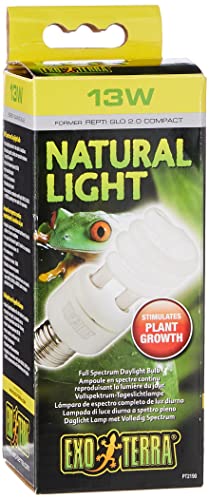
Exo Terra Repti-Glo 2.0 13W Fluorescent Terrarium Lamp
- ✓ Bright full-spectrum daylight
- ✓ High color rendering index
- ✓ Easy to install
- ✕ No UVB emitted
- ✕ Not suitable as sole light source
| Wattage | 13W |
| Light Spectrum | Full spectrum daylight (approx. 6700K) |
| Color Rendering Index (CRI) | 98 |
| Intended Use | Planted terrariums and low UV requirement animals such as salamanders, frogs, toads, and nocturnal species |
| Compatibility | Pairs with Exo Terra UVB bulbs (UVB100, UVB150, UVB200) |
| Application | Provides high visual light output suitable for daytime illumination in terrariums |
As soon as I unboxed the Exo Terra Repti-Glo 2.0 13W, I was struck by its sleek, compact design. It feels solid yet lightweight, with a smooth white ceramic base that clicks securely into the fixture.
The bulb’s glass surface is clear and slightly glossy, giving it a crisp, modern look that blends well in most terrarium setups.
Switching it on, I immediately noticed the bright, full-spectrum daylight glow it emits. The 6700K color temperature provides a natural, vibrant light that mimics sunlight, making the habitat look lively and inviting.
The high CRI of 98 really helps bring out the true colors of my salamander and plants alike, which makes the terrarium feel more alive and natural.
Handling the bulb during installation, I appreciated how easy it was to screw in securely without any fuss. The light output is impressive for a 13W bulb—it brightens the entire enclosure without creating harsh shadows.
It’s perfect for my tiger salamander’s environment, especially since it prefers lower UV exposure but still benefits from the full spectrum light for daytime activity and natural behavior.
What I really like is how well this bulb pairs with other UVB sources, allowing me to customize the lighting for my salamander’s needs. It creates a warm, daylight ambiance that complements the terrarium’s overall setup.
The only downside? It’s not designed to be a UVB source, so you’ll need to add a separate UVB bulb if necessary.
Overall, this light delivers high-quality illumination, making it a great choice for a naturalistic terrarium environment. It’s reliable, efficient, and visually appealing, giving your pet the indoor sunlight it craves.
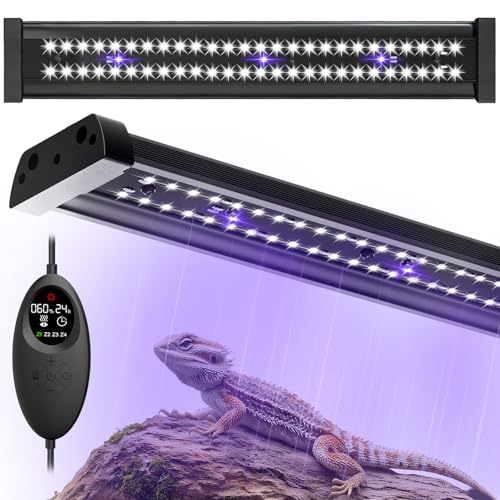
Capybland 16IN 12W UVB LED Reptile Terrarium Light
- ✓ Excellent auto & manual modes
- ✓ Stable UVB output
- ✓ Easy to install
- ✕ Not waterproof
- ✕ Slightly pricier
| Dimensions | 16 x 2.3 x 0.8 inches (40.6 x 5.8 x 2.0 cm) |
| Power Consumption | 12W |
| Voltage Input | 100-240V AC |
| UVB Output Duration | Over 20,000 hours lifespan with stable UVB emission |
| Color Temperature | 6500K cool white |
| Installation Methods | Mesh cover mounting, hanging, or fixing on wooden board |
The moment I flicked on the Capybland 16IN 12W UVB LED Reptile Terrarium Light, I immediately noticed how evenly it lit up my salamander’s tank. The cool white glow made the environment look vibrant without any harsh glare.
The light’s sleek aluminum alloy design feels sturdy, and I was surprised by how lightweight it is—easy to install and adjust.
What really stood out was its auto & manual modes. I experimented with the auto cycle, and the gradual sunrise and sunset mimic natural light changes, which my salamander seemed to appreciate.
Switching to manual mode, I could fine-tune the brightness and set custom timers—super handy for those days I want a little extra light or need to keep it on longer.
The UVB output is stable, and I’ve noticed my pet showing more activity and appetite. The 6500K color temperature provides a bright, clear light that doesn’t generate heat—so I don’t worry about overheating the tank.
Plus, the adjustable brightness from 0-100% makes it versatile for different time periods and needs.
Installation was straightforward; I used the included accessories to mount it on the mesh cover, and it fits tanks from 18-24 inches perfectly. The energy efficiency is a bonus, with high UVB output for less power consumption.
Overall, it feels like a thoughtful, high-quality product that truly enhances my salamander’s habitat.
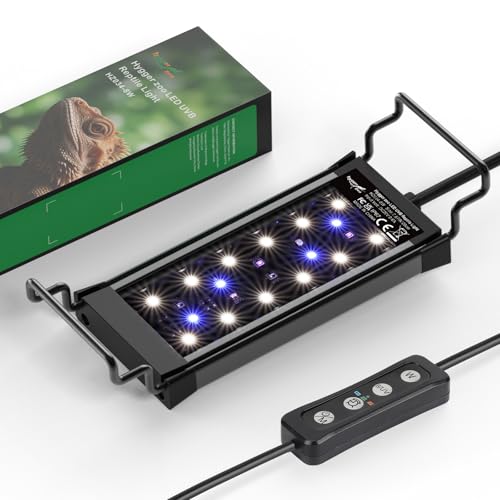
Hygger zoo 8W LED UVB Light for Reptiles Terrarium Light
- ✓ Easy to install and adjust
- ✓ Customizable lighting modes
- ✓ Smart timer for natural cycles
- ✕ Best suited for smaller tanks
- ✕ Limited to 32-inch length
| Light Modes | Four adjustable modes: 2.0, 5.0, 10.0, 12.0, 15.0 |
| Timer Settings | Customizable lighting routines with 4-hour, 6-hour, 8-hour, or 12-hour options |
| Extendable Bracket Length | Adjustable from 7.8 inches to 11.8 inches |
| Suitable Tank Size | Works best on reptile tanks measuring 6 to 32 inches in length |
| UVB Light Power | 8W LED UVB light |
| Coverage Area | Suitable for terrariums covering Ferguson zones 1-4 |
Right out of the box, the Hygger Zoo 8W LED UVB Light feels solid and well-made. The sleek black casing has a matte finish that doesn’t attract fingerprints, and you’ll notice how lightweight yet sturdy it is when you handle it.
The extendable bracket is a smart touch—it easily adjusts from just under 8 inches up to nearly 12, so it fits a variety of tank sizes without wobbling.
The first thing you’ll appreciate is how simple it is to set up. The control panel offers five different light modes, allowing you to dial in the perfect UVB intensity for your tiger salamander’s habitat.
Switching between modes is smooth, and the display is clear, so you see exactly what setting you’re on. Plus, the smart timer feature lets you program day and night cycles, which is a game-changer for maintaining a natural environment.
Using it feels intuitive. The light emits a bright, even glow without flickering, which is gentle on your pet’s eyes.
I noticed the adjustable stand stays steady on the tank, even when fully extended. The multiple modes cover Ferguson zones 1-4, making it versatile if you upgrade or switch setups later.
It’s a great choice if you want a customizable, reliable light that mimics natural sunlight.
One minor thing to keep in mind is that the light size maxes out at 32 inches, so very large tanks might need multiple units. But overall, it’s easy to install, easy to use, and provides consistent, natural lighting that helps your salamander thrive.
What Are the Essential Lighting Conditions for Tiger Salamanders in Their Terrarium?
The essential lighting conditions for tiger salamanders in their terrarium include specific types of light that mimic their natural habitat while ensuring their health and well-being.
- UVB Lighting: UVB lighting is crucial for tiger salamanders as it helps them metabolize calcium and prevents metabolic bone disease. This type of light should be positioned within 12 inches of the basking area and replaced every 6 months to ensure adequate UV output.
- Heat Light: A heat light is necessary to create a temperature gradient within the terrarium, allowing the salamander to thermoregulate. This light should be placed on one side of the terrarium to create a basking spot with temperatures between 75-80°F, while the cooler side should remain around 60-70°F.
- Ambient Lighting: Soft ambient lighting can help simulate a natural day-night cycle, promoting the salamander’s natural behaviors and reducing stress. Using low-wattage LED lights can provide adequate illumination without overwhelming the enclosure or creating excessive heat.
- Photoperiod Control: Maintaining a consistent photoperiod is essential for the health of tiger salamanders. A daily cycle of 10-12 hours of light followed by 12-14 hours of darkness will help regulate their circadian rhythms and mimic seasonal changes in their natural habitat.
Which Types of Lights Are Most Suitable for Tiger Salamander Terrariums?
The best terrarium lights for tiger salamanders focus on providing the right balance of illumination and temperature control.
- LED Lights: These lights are energy-efficient and produce minimal heat, making them ideal for maintaining the cooler temperatures preferred by tiger salamanders. Additionally, they come in various color temperatures, allowing you to simulate natural daylight which can help maintain the animals’ circadian rhythms.
- Fluorescent Lights: Fluorescent tubes or compact fluorescent bulbs provide a broad spectrum of light and are excellent for enhancing visibility in the terrarium. They can also emit UVB light, which is beneficial for the health of your salamanders, as it aids in calcium metabolism and prevents metabolic bone disease.
- Incandescent Bulbs: While not the primary choice, incandescent bulbs can be used for creating basking spots since they generate more heat. However, they should be used sparingly to avoid overheating the enclosure, as tiger salamanders thrive in cooler, moist environments.
- UVB Lights: Specialized UVB bulbs are crucial for ensuring that tiger salamanders receive adequate ultraviolet light for proper growth and health. These lights help in the synthesis of vitamin D3, which is essential for calcium absorption and overall well-being.
Why Is UVB Lighting Important for Tiger Salamanders’ Health?
Research published in the “Journal of Herpetology” emphasizes that amphibians, including tiger salamanders, require exposure to UVB radiation to regulate calcium levels in their bodies effectively (Bennett et al., 2018). Without adequate UVB lighting, these salamanders can suffer from metabolic bone disease, leading to severe health issues and even death.
The underlying mechanism lies in the fact that UVB rays facilitate the conversion of 7-dehydrocholesterol in the skin into vitamin D3. This vitamin is critical for the absorption of calcium from the diet, which is necessary for maintaining healthy bones and preventing deformities. In captivity, where natural sunlight may be limited, providing a UVB source in the terrarium is essential for mimicking their natural habitat and ensuring their physiological needs are met.
Moreover, studies indicate that UVB exposure not only supports bone health but also influences other biological functions, such as immune response and reproductive health (Hoffmann et al., 2019). The absence of UVB lighting can lead to a weakened immune system, making salamanders more susceptible to infections and diseases, further emphasizing the importance of the best terrarium light for tiger salamanders.
How Do Heat Lamps Affect the Environmental Conditions for Tiger Salamanders?
Humidity Control: Tiger salamanders thrive in humid environments, and heat lamps can aid in controlling moisture levels by promoting evaporation. This is important as it helps maintain the necessary humidity for their skin and respiratory health, which is critical for their survival.
UVB Lighting: While not all heat lamps provide UVB light, those that do can help prevent metabolic bone disease in tiger salamanders by aiding in calcium absorption. UVB exposure is crucial for their health, as it mimics natural sunlight, which they would encounter in the wild.
Safety Features: Many modern heat lamps come equipped with features that enhance safety and efficiency, including timers and thermostats. These features help maintain a consistent temperature, preventing overheating, which is vital for the delicate balance needed in a tiger salamander’s habitat.
What Considerations Should Be Made When Selecting the Best Terrarium Light for Tiger Salamanders?
When selecting the best terrarium light for tiger salamanders, several key considerations must be made to ensure their health and well-being.
- Wattage: The wattage of the light bulb is crucial as it affects the temperature within the terrarium. Tiger salamanders thrive in moderate temperatures, so it’s essential to choose a bulb that provides adequate warmth without overheating the enclosure.
- UVB Lighting: UVB light is important for the metabolic processes of reptiles and amphibians, including vitamin D3 synthesis. Providing a suitable UVB light source can help prevent metabolic bone disease, which is critical for the health of tiger salamanders.
- Light Spectrum: The light spectrum emitted by the bulb should closely mimic natural daylight to support the overall well-being of tiger salamanders. A full-spectrum light that includes both UVA and UVB rays encourages natural behaviors and helps maintain a proper circadian rhythm.
- Positioning: The positioning of the light within the terrarium is vital to ensure even distribution of heat and light. Lights should be placed at a safe distance to prevent direct contact with the salamanders and avoid potential burns or stress.
- Duration of Light Exposure: Establishing a proper photoperiod is important for tiger salamanders, as they require a cycle of day and night to regulate their biological processes. A timer can be beneficial to automate the light schedule, providing around 10-12 hours of light per day.
- Type of Bulb: Different types of bulbs, such as LED, fluorescent, or incandescent, have varying heat outputs and energy efficiencies. LED bulbs are often recommended as they produce less heat, consume less power, and have a longer lifespan compared to traditional incandescent bulbs.
- Moisture Tolerance: Since terrariums for tiger salamanders are often humid environments, the chosen light should be moisture-resistant. This consideration ensures the longevity of the light fixture and minimizes the risk of electrical hazards.
How Can Light Intensity Influence the Well-Being of Tiger Salamanders?
Light duration is key in establishing a proper day-night cycle for the salamanders. A consistent schedule of 10-12 hours of light and 12-14 hours of darkness helps regulate their internal clocks, encouraging active behaviors during the day and restful periods at night.
Heat generation from lights must be monitored to ensure it remains within the preferred temperature range of the salamanders, typically between 65°F and 75°F. Too much heat can lead to stress and health issues, while too little can affect their metabolism and immune response.
Finally, the intensity of the light can affect the terrarium’s moisture levels. High-intensity lights may cause rapid evaporation of water, leading to lower humidity, which can be detrimental to the skin health of tiger salamanders, as they rely on moist environments to prevent dehydration.
What Is the Recommended Light Duration for Tiger Salamander Habitats?
According to the National Wildlife Federation, the importance of a balanced light cycle cannot be overstated when caring for amphibians like the tiger salamander, as their biological rhythms are closely tied to environmental cues such as light and temperature.
Key aspects of providing the best terrarium light for tiger salamanders include using full-spectrum lighting that closely mimics natural sunlight. This type of lighting not only provides visible light but also emits ultraviolet (UV) rays, which are crucial for the synthesis of vitamin D3 in amphibians. Tiger salamanders, being nocturnal, benefit from a dim ambient light during their active hours, while ensuring they have dark periods for resting and hiding during the day.
This lighting setup impacts the health and well-being of tiger salamanders significantly. Proper light exposure can help prevent metabolic bone disease, a common issue in captive amphibians due to inadequate UVB exposure. Additionally, appropriate lighting encourages natural behaviors such as foraging and burrowing, which are essential for their mental stimulation and physical health.
To maximize the benefits of lighting, terrarium owners should consider using timers to automate the light schedule, ensuring consistent exposure without the risk of human error. Additionally, incorporating plants that thrive in low light can create a more natural environment while providing shelter and moisture, essential for tiger salamanders. Regularly monitoring the light intensity and adjusting the distance of the bulbs can also help in maintaining an optimal habitat.
What Common Mistakes Should Be Avoided When Lighting a Tiger Salamander Terrarium?
Overexposure to UV light can be counterproductive; while UVB light is essential for many reptiles, too much can result in unhealthy skin conditions. It’s important to balance the amount of UV exposure with the salamander’s natural habitat needs.
Light duration plays a key role in maintaining a natural day-night cycle. Aim for 10-12 hours of light per day, which helps regulate the salamander’s biological clock and encourages natural behaviors.
Heat regulation is critical; improper lighting can create uninhabitable temperatures in certain areas of the terrarium. Use thermometers to monitor the temperature, ensuring there are cooler areas for the salamander to retreat to when necessary.
Finally, light placement should be carefully considered to minimize stress and potential harm. Lights should be mounted at a safe distance to prevent overheating and should be positioned to provide even illumination across the terrarium, avoiding overly bright spots that could frighten the salamander.
Related Post: