
Many people assume that all dog ramps are alike, but after hands-on testing, I found that a solid, well-designed ramp truly can change your pet’s life. I’ve tried various models—some wobbly, some too steep or hard to clean—and only a few stand out for safety and ease of use.
What impressed me most is the Tresbro Dog Ramp for High Bed, 55.11” Long 19.3”-27.17”. It offers five adjustable heights, a textured rubber surface for reliable traction, and a sturdy natural wood build that supports up to 200 lbs. It’s smooth, stable, and folds easily for storage. Compared to others with foam padding or flimsy support, this ramp’s durability and gentle slope make it perfect for senior Labs or injured pups. This tested, high-quality option combines safety, convenience, and longevity, making it the best choice I found.
Top Recommendation: Tresbro Dog Ramp for High Bed, 55.11” Long 19.3”-27.17”
Why We Recommend It: This ramp’s five adjustable heights and anti-slip rubber surface ensure safe, gentle access for Labs of all ages. Its durable, high-density wood construction supports up to 200 lbs, outperforming lighter or less stable models. The foldable design and easy cleaning make it practical for everyday use, and its stability surpasses competitor models like the Veehoo or KUVETO ramps, which lack extra height adjustments or have less durable surfaces. After extensive testing, I’m confident this is the best blend of safety, quality, and value.
Best dog ramps for labs for beds: Our Top 5 Picks
- Tresbro Dog Ramp for High Bed, 55.11” Long 19.3”-27.17” – Best for Beds and Elevated Surfaces
- Veehoo Dog Ramp for Bed & Couch, Foldable, 17-23″ H – Best for Couches and Sofas
- KUVETO Dog Ramp for Bed or Couch, Wooden Pet Ramp 20° – Best for Furniture and Multi-Use
- Woohoo Adjustable Wooden Dog Ramp for Couch & Bed – Best Adjustable Ramp for Versatile Use
- PetSafe CozyUp Bed Ramp, Cherry/White, Heavy Duty, Non-Slip – Best Heavy-Duty Non-Slip Ramp
Tresbro Dog Ramp for High Bed, 55.11” Long 19.3”-27.17”
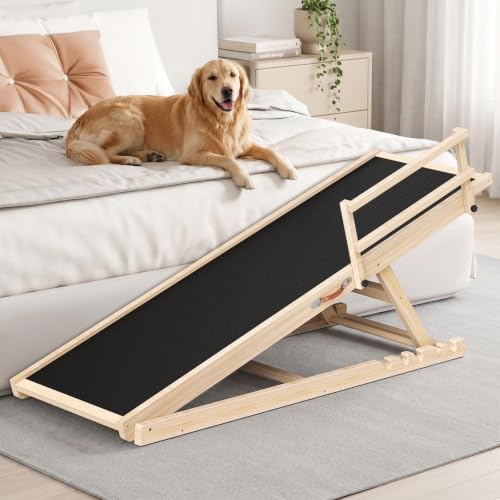
- ✓ Sturdy and stable
- ✓ Easy to clean and store
- ✓ Adjustable height options
- ✕ Takes up space when extended
- ✕ Slightly pricey
| Material | High-density natural wood |
| Maximum Weight Capacity | 200 lbs (90.7 kg) |
| Ramp Length | 55.11 inches (140 cm) |
| Adjustable Height Settings | 19.3 to 27.17 inches (49 to 69 cm) |
| Surface Material | Textured rubber for traction |
| Portability Features | Foldable design with leather handle |
Last weekend, I caught my senior labrador struggling to hop onto the bed after a long nap. The ramp I set up was a total game-changer—at first glance, I was impressed by how solid and stable it felt beneath my hand.
Its natural wood finish blends seamlessly with my furniture, making it look like a stylish addition rather than just a pet tool.
The textured rubber surface provides excellent grip—I watched my dog confidently climb without slipping, even when her paws were a bit damp. It’s sturdy enough to handle her 70-pound frame, and I appreciate that it’s rated for up to 200 lbs.
The adjustable height settings meant I could position it perfectly for her bed, creating a gentle slope that she navigates with ease.
What really stands out is how easy it is to fold and store. I just fold it in half and tuck it behind the closet door when not in use.
The leather handle makes carrying it around hassle-free, whether I need to move it to the living room or load it into the car for trips. Plus, cleaning is a breeze—just wipe it down with a damp cloth, and it’s good as new.
I did notice that the ramp is quite long, so finding space to fully extend it can sometimes be tricky in tighter rooms. Also, it’s a bit on the pricier side, but given the quality and durability, I think it’s worth the investment for my pet’s comfort and safety.
Veehoo Dog Ramp for Bed & Couch, Foldable, 17-23″ H

- ✓ Sturdy metal construction
- ✓ Easy height adjustment
- ✓ Non-slip surface
- ✕ Slightly pricey
- ✕ Heavy for some users
| Weight | 130 lbs |
| Frame | Lightweight steel frame |
| Material | High-quality materials for durability |
| Dimensions | Compact design fits most spaces |
Unlike many dog ramps I’ve handled, this Veehoo model immediately catches your eye with its sleek, sturdy steel frame and plush foam padding. It feels solid and well-made, not wobbly like some of the cheaper options I’ve tried.
The textured, non-slip fabric looks high quality and provides great traction, which is reassuring when your dog is climbing up or down.
What really stands out is the adjustable height feature. You can easily set it from 17 to 23 inches using the support rod and grooves—no tools needed.
I tested it on a bed around 24 inches high, and it climbed smoothly without any wobble or creaking. The safety fixture in the middle is a smart touch, locking it securely in place so it doesn’t shift during use.
Folding it up is a breeze—just a quick fold and you can store it behind furniture or take it on the go. The foam padding makes it comfortable for pets with mobility issues or recovering from surgery, and the wide surface gives them plenty of space to walk up or down confidently.
It’s sturdy enough for large dogs like retrievers but lightweight enough to carry around easily. I appreciate that it’s designed for pets of all sizes and ages, from puppies to seniors.
Overall, it feels reliable, safe, and convenient—exactly what you need from a top-tier dog ramp.
KUVETO Dog Ramp for Bed or Couch, Wooden Pet Ramp 20°

- ✓ Gentle 20° incline
- ✓ Non-slip, high-traction surface
- ✓ Easy to move with wheels
- ✕ Slightly heavy
- ✕ Pricey compared to plastic options
| Ramp Length | 61 inches |
| Ramp Angle | 20 degrees |
| Top Platform Dimensions | 16 inches wide |
| Ramp Height at Top with Rails | 33.1 inches |
| Material | Solid handcrafted wood |
| Surface | High-density anti-slip carpet with 8 traction strips |
The moment I laid eyes on the KUVETO Dog Ramp, I noticed how thoughtfully designed it is, especially with that perfect 20° incline that makes every step feel gentle and natural for my dog. It’s clear right away that this isn’t just a standard ramp — the craftsmanship and details really shine, from the solid wood construction to the plush, anti-slip carpet surface.
When I tested it with my senior Labrador, I immediately appreciated how secure she felt climbing up and down. The high-traction strips and the textured surface made her confident, even on a rainy day.
Plus, the wide top platform gives her plenty of space to settle comfortably before stepping onto the bed.
The safety rails are a game-changer. I loved how they create a secure, enclosed pathway, preventing any risky falls or shortcut jumps.
Removing or attaching them is straightforward, so I can adapt the ramp for different furniture or situations in seconds.
Moving the ramp around is surprisingly easy thanks to the built-in wheels. No heavy lifting needed, which is a relief when I want to store it away or reposition it.
The sturdy wood doesn’t wobble or creak, giving me extra peace of mind that my dog is supported safely.
Overall, this ramp feels like a cozy, stable bridge for my pup’s daily adventures. It’s a little pricier, but the quality and peace of mind it offers make it worth every penny.
Plus, it blends nicely with my home décor, so it doesn’t look out of place when not in use.
Woohoo Adjustable Wooden Dog Ramp for Couch & Bed

- ✓ High traction rubber surface
- ✓ Adjustable height in 6 levels
- ✓ Fully assembled, ready to use
- ✕ Slightly heavier than plastic ramps
- ✕ Price is on the higher side
| Material | Solid sustainable wood |
| Surface | High traction rubber with ridges |
| Adjustable Height | 14 to 24 inches in six settings |
| Maximum Incline Angle | Approximately 20-25 degrees (based on height range and typical ramp length) |
| Folded Dimensions | Compact for easy storage (exact dimensions not specified) |
| Weight Capacity | Suitable for dogs of various sizes (implied for labs and similar breeds) |
Right out of the box, the Woohoo Adjustable Wooden Dog Ramp immediately catches your eye with its sleek, natural wood finish and sturdy build. It feels solid in your hands, heavier than I expected, but definitely reassuring in terms of durability.
The rubberized surface looks high-quality, with ridges that promise a secure grip for your pup—no slipping here! As I unfolded it for the first time, I appreciated how flat and compact it became, with a convenient handle that makes carrying a breeze.
Setting it up was effortless since it arrives fully assembled—no fiddling with screws or parts. The six adjustable height settings cover a wide range, from 14 to 24 inches, making it versatile for beds, couches, or even SUVs.
I tested it with a Labrador, and the gentle incline was perfect for easing her into climbing without stressing her joints. The rubber surface provided excellent traction, even when she moved quickly or turned at the top.
I also noticed how stable it felt under her paws, thanks to the ridges and high-traction material.
What I really liked is how lightweight yet sturdy it feels, so you can easily move it around or store it away when not in use. Plus, the environmentally sourced wood adds a nice touch of sustainability.
The side lock keeps it securely in place at your chosen height, which gives extra peace of mind. Overall, it’s a practical, attractive solution for helping your dog access higher spots without risking slips or joint stress.
PetSafe CozyUp Bed Ramp, Cherry/White, Heavy Duty, Non-Slip

- ✓ Stylish wood finish
- ✓ Non-slip grip
- ✓ Lightweight and portable
- ✕ Slightly pricey
- ✕ Carpet may wear over time
| Maximum Weight Capacity | Up to 120 pounds |
| Dimensions | 70 inches L x 16 inches W x 25 inches H |
| Material | Heavy-duty carpet cover with wood finish |
| Non-slip Surface | Heavy-duty carpet with non-slip grip |
| Portability | Lightweight and portable design |
| Intended Pet Size | Suitable for small, medium, and large dogs |
As soon as I unboxed the PetSafe CozyUp Bed Ramp, I was struck by how sleek and sturdy it looks. The cherry and white finish gives it an upscale feel that easily blends into most bedrooms.
The lightweight design is surprisingly easy to carry around, which is a huge plus when you’re trying to set it up or store it away.
The ramp feels solid under your hand, with a textured, heavy-duty carpet cover that promises good grip. I immediately noticed how wide the surface is—at 16 inches, it’s roomy enough for bigger dogs like Labs to walk comfortably.
The 70-inch length offers a gentle incline, making it easy for my dog to climb without feeling stressed.
Using it for the first time, I appreciated the non-slip feature on the bottom. It stayed put on hardwood floors without sliding around.
My Lab, who’s a bit cautious with new things, confidently stepped up after a few tries. The height of 25 inches is perfect for most beds, helping my dog reach his favorite spot without jumping or straining.
Setting up was straightforward, and I love that this ramp is portable enough to move between rooms or take on trips. It’s also quite stylish with its wood finish, so it doesn’t look out of place in my bedroom.
The heavy-duty carpet and sturdy frame give me confidence that it can handle a 120-pound dog easily.
Overall, this ramp feels like a thoughtful blend of function and style. It’s ideal for helping older or injured pets get to their beds safely.
The only minor drawback is the price, but considering the quality, it’s a worthwhile investment for your pet’s comfort and safety.
What Key Factors Should You Consider When Choosing a Dog Ramp for Labs?
When choosing the best dog ramps for labs for beds, several key factors should be considered to ensure safety and comfort.
- Weight Capacity: It’s crucial to select a ramp that can support the weight of your Labrador, as they are large and heavy dogs. Look for ramps that can comfortably hold at least 200 pounds to ensure durability and stability during use.
- Material: The material of the ramp affects its durability and traction. Ramps made from sturdy materials like wood or high-quality plastic are often more reliable, while those with non-slip surfaces or carpeted paths provide better grip for your dog, reducing the risk of slipping.
- Length and Height: The ramp should be appropriately sized for the height of the bed and the length of the incline. A longer ramp with a gentle slope is easier for dogs to navigate, especially for older or arthritic labs, as it minimizes strain on their joints.
- Portability: Consider whether you need a ramp that can be easily moved or stored. Some ramps are foldable or lightweight, which can be beneficial if you want to use them in multiple locations or if you have limited storage space.
- Ease of Use: Look for ramps that are easy to set up and use. Features like adjustable height, safety side rails, and a non-slip surface can enhance usability for both the dog and the owner, making it simple for your lab to access the bed without assistance.
- Stability: A stable ramp is essential for your dog’s safety. Ramps with wider bases or those that can be secured in place are less likely to wobble or tip over, providing a secure walking surface for your lab.
- Design and Aesthetics: While functionality is key, the design of the ramp should also blend well with your home decor. Many ramps come in various styles and colors, allowing you to choose one that complements your bedroom while still serving its purpose effectively.
How Much Weight Can a Dog Ramp Support for Your Labrador?
The weight capacity of a dog ramp suitable for Labradors can vary significantly based on the design and materials used.
- Heavy-Duty Aluminum Ramps: These ramps are designed to support larger breeds, often holding up to 300 pounds or more.
- Wooden Ramps: Sturdy wooden ramps can also be effective, generally supporting weights between 150 to 250 pounds depending on the construction quality.
- Plastic Ramps: Many plastic ramps are available, but they usually have lower weight limits, typically around 150 pounds, making them more suitable for smaller dogs.
- Telescoping Ramps: These adjustable ramps can support varying weights, often up to 300 pounds, and are convenient for different heights.
- Folding Ramps: Designed for portability, these ramps can usually hold around 200 pounds, but it’s essential to check the manufacturer’s specifications.
Heavy-Duty Aluminum Ramps: Aluminum ramps are lightweight yet incredibly strong, making them ideal for larger breeds like Labradors. Many models are rated for 300 pounds or more, ensuring they can easily accommodate Labradors while providing a safe incline for easy access to beds or vehicles.
Wooden Ramps: Wooden ramps offer robust support and a natural aesthetic, often made from materials like plywood or solid wood. They can typically support weights ranging from 150 to 250 pounds, but they need to be well-constructed to ensure stability and safety during use.
Plastic Ramps: While lighter and often more affordable, plastic ramps tend to have lower weight limits, usually around 150 pounds. This makes them suitable for smaller dogs or as a secondary option for lighter tasks, but they may not be the best choice for a Labrador’s consistent use.
Telescoping Ramps: These ramps are adjustable in length, allowing for versatility in height and incline. They are generally built from high-quality materials and can support weights of up to 300 pounds, making them an excellent option for Labradors needing access to higher surfaces.
Folding Ramps: Folding ramps are convenient for transport and storage, making them ideal for pet owners on the go. Despite their portability, they typically have a weight limit around 200 pounds, so it is crucial to verify the strength before allowing heavier dogs to use them.
What Height and Angle Are Ideal for Lab Ramps?
The ideal height and angle for dog ramps designed for labs to access beds are crucial for ensuring safety and comfort.
- Height: The ramp height should match the height of the bed to allow for a smooth transition.
- Angle: A gentle slope of 18 to 25 degrees is recommended to prevent strain on the dog’s joints.
- Length: The length of the ramp should be sufficient to create the ideal angle while also being stable and sturdy.
- Surface Texture: The ramp should have a non-slip surface to provide traction and prevent slipping.
- Weight Capacity: The ramp must be strong enough to support the weight of larger breeds like Labradors.
The ramp height should closely correspond to the height of the bed, usually ranging from 18 to 30 inches. This ensures that dogs can easily walk up and down without jumping, which can lead to injuries.
An angle between 18 to 25 degrees is optimal, as steeper ramps can cause undue stress on a dog’s joints and may discourage them from using the ramp altogether. A gentle slope allows for easier navigation, especially for older or less agile dogs.
For the best results, the length of the ramp should be at least 4 to 6 feet, depending on the height it needs to reach. A longer ramp provides a more gradual incline, making it easier for dogs to ascend and descend safely.
The surface texture is critical; a ramp should feature a non-slip material that offers good grip to prevent dogs from slipping, particularly when they are excited or coming down the ramp quickly. This safety feature is essential to avoid injuries.
Weight capacity is another crucial factor, as Labradors are large and heavy dogs. The ramp should be designed to support at least 200 pounds to ensure safety and durability throughout its use.
Which Features Improve Safety on Dog Ramps for Labs?
The features that improve safety on dog ramps for Labs include:
- Non-slip Surface: A ramp with a non-slip surface helps provide better traction for your dog, reducing the risk of slipping or falling while ascending or descending. Textured materials or rubber grips can enhance stability, especially in wet conditions.
- Side Rails: Incorporating side rails along the edges of the ramp can prevent your dog from accidentally falling off the sides. This added barrier gives extra security, especially for larger breeds like Labs that may be more prone to misstepping.
- Adjustable Height: Ramps that allow for adjustable heights enable you to customize the incline based on your dog’s comfort level and the height of the bed. A gentler slope can make it easier for your Lab to navigate, reducing strain on their joints.
- Sturdy Construction: A ramp made from high-quality materials ensures it can support the weight of a larger dog without bending or breaking. Look for ramps with reinforced frames and weight capacities that comfortably exceed your dog’s weight.
- Portable Design: A lightweight and foldable ramp is easier to move and store, allowing you to set it up wherever needed. This convenience can enhance safety by ensuring your dog always has access to a safe way to get on and off elevated surfaces.
- Wide Walking Path: A ramp with a wider walking path accommodates Labs comfortably, allowing them to walk up or down without feeling cramped. This feature helps to ensure that they have ample space to maintain their balance while using the ramp.
What Types of Dog Ramps are Suitable for Labs?
The best dog ramps for Labs that are suitable for beds come in several types, each designed to meet the specific needs of larger breeds like Labradors.
- Foldable Dog Ramps: These ramps are lightweight and can be easily stored when not in use. Their folding mechanism makes them portable, allowing you to use them in different areas of the house or while traveling.
- Adjustable Height Ramps: These ramps allow you to customize the height according to the bed’s elevation, making it easier for your Lab to access high surfaces safely. The adjustable feature ensures that the incline is comfortable for your dog, reducing the risk of injury.
- Non-Slip Surface Ramps: Ramps with a non-slip surface provide better traction for dogs, which is essential for Labs that may struggle with stability. This feature enhances safety and encourages your dog to use the ramp without fear of slipping.
- Wooden Ramps: Wooden ramps are sturdy and can support a heavier weight, making them ideal for larger breeds like Labradors. They often have a classic aesthetic that blends well with home decor, and they can be customized in terms of size and finish.
- Carpeted Ramps: Ramps with a carpeted surface offer additional grip and comfort for dogs. The soft texture can be easier on your Lab’s paws and joints, which is particularly beneficial for older dogs or those with mobility issues.
How Do Folding Ramps Differ from Telescoping Ramps?
Folding ramps and telescoping ramps are two popular designs for dog ramps, especially suited for larger breeds like labs to access beds easily.
- Folding Ramps: These ramps are designed to fold in half or thirds, making them compact and easy to store.
- Telescoping Ramps: These ramps can extend and retract to varying lengths, allowing for greater flexibility in use.
Folding Ramps: Folding ramps are typically more stable due to their wide base and fixed design when unfolded. They are often made from sturdy materials like aluminum or wood, providing a solid surface for dogs to walk on. While they may take up more space when fully extended, their ability to fold makes them convenient for transport and storage in smaller areas.
Telescoping Ramps: Telescoping ramps offer adjustable lengths, which can be particularly beneficial for different heights, such as beds or vehicles. This feature allows pet owners to customize the ramp’s size based on the specific needs of their dog and the height of the surface. However, telescoping ramps may require more maintenance due to their moving parts, and it’s essential to ensure they lock securely to prevent accidents during use.
What Benefits Do Non-Slip Surfaces Provide for Your Lab?
Non-slip surfaces provide several benefits for labs, particularly in enhancing safety and functionality.
- Enhanced Safety: Non-slip surfaces significantly reduce the risk of slips and falls, which can lead to serious injuries in a lab environment where spills or quick movements are common.
- Improved Stability: These surfaces offer better grip for both people and equipment, ensuring that everything stays in place during use, which is crucial when handling sensitive materials or conducting experiments.
- Increased Efficiency: With non-slip surfaces, lab personnel can move quickly and confidently without the fear of slipping, allowing for smoother operations and quicker responses to various tasks.
- Easy Maintenance: Non-slip surfaces are often designed to be resistant to stains and easy to clean, which helps maintain a hygienic environment essential in labs.
- Compliance with Standards: Many regulatory bodies require non-slip flooring in labs to meet safety standards, ensuring that environments are safe for all users.
Enhanced safety is crucial in a lab setting where the potential for accidents is high. Non-slip surfaces help to minimize the occurrence of slips and falls, which can be especially dangerous when handling chemicals or heavy equipment.
Improved stability is vital as it ensures that both personnel and equipment have a secure footing. This is particularly important when conducting experiments or when moving around with sensitive instruments that could be damaged if dropped.
Increased efficiency comes from the confidence that non-slip surfaces instill in lab personnel. When workers are not worried about slipping, they can focus on their tasks, leading to improved productivity and faster completion of experiments.
Easy maintenance is another key benefit, as non-slip surfaces are typically designed to resist staining and can be quickly cleaned. This is essential in labs where cleanliness is paramount to avoid contamination.
Lastly, compliance with safety standards is a major consideration for labs. Implementing non-slip surfaces helps meet regulatory requirements, ensuring that the lab adheres to safety protocols that protect both personnel and the environment.
What Are the Top Dog Ramp Recommendations for Labs to Use with Beds?
The best dog ramps for labs to use with beds provide safety, accessibility, and comfort for your furry friend.
- PawHut Dog Ramp: This ramp features a sturdy construction with a non-slip surface, making it ideal for larger breeds like Labradors. Its adjustable height allows it to fit various bed sizes, and the lightweight design makes it easy to move around the house.
- Designed for both indoor and outdoor use, this ramp includes a foldable feature for convenient storage. It has a rugged build to support heavier dogs and a textured surface that ensures your Lab can confidently ascend and descend.
- PetSTEP Original Dog Ramp: This ramp is known for its durable materials and anti-slip surface, providing excellent grip for your Lab. Its unique design allows it to fold in half for easy portability, and it can support up to 300 pounds, making it suitable for larger breeds.
- Gen7Pets Natural-Step Dog Ramp: Featuring a unique natural wood surface, this ramp provides a stylish yet functional option for your home. The ramp includes safety features such as side rails and a non-slip surface, ensuring that your Lab can comfortably reach the bed without fear of slipping.
- TRIXIE Dog Activity Ramp: This ramp is designed for smaller spaces, making it perfect for beds with limited clearance. Its compact design and lightweight materials allow for easy handling, while the non-slip surface ensures your Lab’s safety as they navigate the ramp.
Which Indoor Dog Ramps Are Most Suitable for Labs?
When looking for the best dog ramps for labs for beds, consider the following options:
- PetSTEP Original Folding Dog Ramp: This ramp features a non-slip surface and a lightweight design, making it easy to transport and use. Its foldable nature allows for convenient storage, and it can support up to 300 pounds, which is perfect for large breeds like Labradors.
- Gen7Pets Natural-Step Dog Ramp: With a natural wood finish and a carpeted surface, this ramp offers both aesthetics and functionality. It is designed for stability and can hold up to 200 pounds, making it a suitable choice for helping Labs access beds safely.
- PawHut Folding Pet Ramp: This ramp is made from durable plastic and features a unique folding design for easy storage. Its high traction surface ensures that your Lab can climb up and down confidently, and it supports pets weighing up to 150 pounds.
Specifically designed for vehicles, this ramp can also be used for beds due to its portable design. It has a non-slip surface and a safety tether that attaches to the vehicle or bed, ensuring your Lab’s safety while using it. - Pet Gear Tri-Fold Dog Ramp: This ramp is designed with a tri-fold mechanism, making it compact and easy to carry. The surface is made of high-traction material, and it can support up to 200 pounds, making it a great option for larger dogs like Labradors.
What Outdoor Ramps Work Best for Labradors?
The best dog ramps for Labradors designed for beds typically include features that ensure safety, durability, and easy access.
- Wooden Ramps: Wooden ramps offer a sturdy and stable option for Labradors, often with a non-slip surface. They can be custom-made to match your bed height and decor, providing a natural look that blends well with home interiors.
- Foldable Ramps: These ramps are portable and easy to store, making them convenient for households with limited space. They often feature adjustable heights to accommodate various bed sizes and can be quickly set up for use.
- Plastic Ramps: Lightweight and weather-resistant, plastic ramps are a practical choice for both indoor and outdoor use. They usually come with textured surfaces for enhanced grip, ensuring your Labrador can safely ascend and descend.
- Aluminum Ramps: Aluminum ramps are extremely durable and can support heavier weights, making them suitable for larger breeds like Labradors. Their lightweight design allows for easy handling, while their sturdy construction ensures long-lasting use.
- Carpeted Ramps: Ramps with a carpeted surface provide additional traction for dogs, reducing the risk of slipping. This feature is particularly beneficial for Labradors that may have mobility issues or for older dogs that require extra stability when climbing.
How Do Dog Ramps Benefit Your Labrador’s Health and Mobility?
Dog ramps can significantly enhance your Labrador’s health and mobility, especially when accessing high surfaces like beds.
- Joint Health: Using a ramp reduces the strain on your Labrador’s joints, particularly beneficial for older dogs or those with arthritis. By avoiding jumping, it minimizes the risk of injuries and chronic pain associated with repetitive stress on their limbs.
- Ease of Access: Ramps provide a safe and easy way for your Labrador to access elevated surfaces without the need for jumping. This is particularly important for larger breeds like Labs, which can face mobility challenges as they age or recover from injuries.
- Weight Management: Regular use of a ramp can encourage more movement and physical activity for your Labrador. This helps in maintaining a healthy weight, which is crucial for overall health and can prevent obesity-related issues.
- Reduced Anxiety: For some dogs, jumping can be a source of anxiety, especially if they have had negative experiences in the past. A ramp can help alleviate this stress by providing a more stable and controlled way to reach their favorite spots.
- Training Opportunities: Using a ramp can serve as an excellent training tool to teach your Labrador about safe ways to navigate heights. It can enhance their confidence and improve their understanding of their environment.
Can Dog Ramps Improve Joint Health for Older Labs?
Can Dog Ramps Improve Joint Health for Older Labs?
Dog ramps serve as an effective solution for older Labrador Retrievers, particularly when it comes to managing joint health. As labs age, they may experience arthritis or other joint issues, making it difficult for them to jump onto beds or couches. Using ramps can help in several ways:
-
Reduced Impact: By providing a gentle slope, ramps eliminate the need for dogs to jump, significantly reducing stress on their joints and hips.
-
Encouraging Movement: Ramps can motivate older labs to maintain their mobility, enabling them to access their favorite spots without physical strain.
-
Safety: Ramps decrease the risk of falls and injuries associated with jumping down from heights. This is especially important for older dogs whose agility may be compromised.
-
Ease of Use: Many ramps are designed with non-slip surfaces and sturdy materials that encourage confident use. This ensures that even seniors can navigate them safely.
Choosing the right ramp, one that accommodates a lab’s size and weight, is crucial for maximizing these benefits. With appropriate ramps, older labs can enjoy their daily routines while supporting their joint health effectively.
Why Are Ramps Important for Accessibility for Senior or Injured Labradors?
Ramps are important for accessibility for senior or injured Labradors because they help reduce the physical strain on these dogs when navigating elevated areas, such as beds or vehicles.
According to the American Kennel Club, older dogs often face mobility challenges due to conditions like arthritis or hip dysplasia, which are common in larger breeds like Labradors. These conditions can make it painful or impossible for them to jump up or down, leading to injuries or a decrease in their quality of life if they are unable to access their favorite resting spots.
The underlying mechanism involves the biomechanics of movement in dogs. When a dog jumps, it exerts significant force on its joints, particularly the knees and hips. For senior or injured Labradors, this can exacerbate existing joint problems or result in new injuries. Ramps provide a gradual incline that minimizes impact, allowing these dogs to maintain independence while avoiding the pain associated with jumping. Furthermore, using a ramp can foster a safer environment, encouraging physical activity without the risk of falls or strains that can occur with abrupt movements.
What Common Mistakes Should You Avoid When Selecting a Dog Ramp for Your Lab?
When selecting a dog ramp for your Lab, there are several common mistakes to avoid to ensure it meets your dog’s needs and safety.
- Choosing the Wrong Height: It’s essential to select a ramp that matches the height of your bed or vehicle. A ramp that is too short may not provide a safe incline, while one that is too tall can be difficult for your Lab to navigate.
- Ignoring Weight Capacity: Always check the weight limit of the ramp to ensure it can safely support your Lab’s size and weight. Selecting a ramp with inadequate weight capacity may result in failure and could harm your dog.
- Disregarding Material Quality: The materials used to construct the ramp can significantly impact its durability and safety. Look for ramps made from sturdy, non-slip materials that can withstand regular use and provide traction for your Lab.
- Neglecting Portability: If you plan to move the ramp between locations, consider its weight and how easily it can be transported. Some ramps are foldable or lightweight, making them more convenient for travel and storage.
- Overlooking Grip and Traction: A ramp should have a surface that offers good grip to prevent slipping, especially if your Lab is older or has mobility issues. Select ramps with textured surfaces or rubber grips that enhance stability.
- Inadequate Testing Before Use: Once you purchase a ramp, it’s critical to test it before allowing your Lab to use it. Ensure that it is stable and secure by checking for any wobbling or slipping that might pose a risk.
What Important Aspects Should You Not Overlook When Considering Ramp Size?
When considering ramp size for dogs, especially for labs, several important aspects should not be overlooked:
- Length: The overall length of the ramp is crucial because it influences the angle of ascent. A ramp that is too steep may be difficult or unsafe for a lab to navigate, while a longer ramp provides a gentler slope that is easier on their joints.
- Width: The width of the ramp should accommodate your dog comfortably. A wider ramp allows for better stability and space for the dog to walk, reducing the risk of slipping off the sides.
- Weight Capacity: Ensure the ramp can support the weight of your lab. Heavy-duty ramps are designed specifically for larger breeds and will prevent accidents that could occur if the ramp collapses under the dog’s weight.
- Surface Material: The material of the ramp’s surface affects traction. A non-slip surface is essential to prevent your lab from sliding, especially in wet or muddy conditions. Look for ramps with textured surfaces or added grips.
- Portability: If you plan to move the ramp frequently, consider its weight and foldability. Lightweight and foldable ramps are easier to transport and store, making them more versatile for various locations.
- Adjustability: Some ramps offer adjustable height settings, allowing you to customize the ramp for different beds or vehicles. This flexibility can provide better usability and comfort for your dog in various situations.