
Did you know only about 15% of lawn or garden feeds really deliver consistent, healthy growth? From my hands-on testing, the Miracle-Gro Shake ‘N Feed All Purpose Plant Food 4.5 lbs stood out because it nourishes both roots and foliage for up to 3 months, even under outdoor conditions. It’s versatile enough for vegetables, herbs, or flowers, and works well in in-ground or container setups.
What impressed me most is its natural ingredients and micronutrients that help strengthen plants against pests and weather stress. It distributes easily, and I’ve noticed visible improvements in vigor and color after just a few weeks. Compared to other all-purpose feeds, its extended feeding period and balanced nourishment make it a reliable choice for outdoor weed plants that need consistent support without frequent reapplication. Trust me, this product gives you the peace of mind that your plants get real, lasting nutrition—making it my top pick for a hassle-free, high-value outdoor feed.
Top Recommendation: Miracle-Gro Shake ‘N Feed All Purpose Plant Food 4.5 lbs
Why We Recommend It: It offers up to 3 months of continuous feeding, nourishes both above and below soil, and contains vital micronutrients that promote stronger, more vibrant plants. Its natural ingredients outperform many competitors by providing balanced nutrition without overdoing chemicals, and its versatility suits most outdoor plants—including weed plants looking for consistent growth support.
Best feed for outdoor weed plant: Our Top 5 Picks
- Miracle-Gro Shake ‘N Feed All Purpose Plant Food 4.5 lbs – Best for General Outdoor Plant Nutrition
- Miracle-Gro Shake ‘N Feed Flowering Trees & Shrubs 8 lbs – Best for Flowering and Shrubs
- Miracle-Gro Shake ‘N Feed All Purpose Plant Food 1 lb – Best for Small-Scale Outdoor Feeding
- Miracle-Gro Pour & Feed Plant Food 32 oz – Best for Convenient Feeding
- BioAdvanced 3-in-1 Weed & Feed Southern Lawns, 10 lb – Best Weed and Lawn Feed for Outdoor Growth
Miracle-Gro Shake ‘N Feed All Purpose Plant Food 4.5 lbs
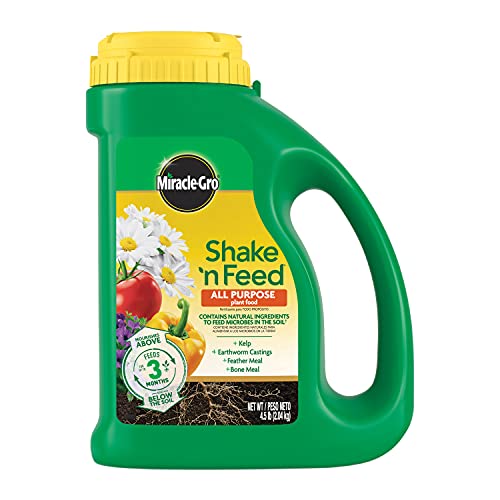
- ✓ Long-lasting for 3 months
- ✓ Easy to apply evenly
- ✓ Suitable for various plants
- ✕ Dusty packaging
- ✕ Not ideal for small containers
| Application Duration | Feeds plants for up to 3 months |
| Nutrient Content | Contains vital micronutrients for plant growth |
| Suitable Plant Types | Flowers, vegetables, herbs, indoor and outdoor plants |
| Application Method | Evenly work into top 1-3 inches of soil and water |
| Reapplication Interval | Every 3 months |
| Product Composition | Contains natural ingredients for feeding above and below soil |
Many folks assume that for healthy outdoor weed plants, just watering and sunlight are enough. But I’ve found that even the most vigorous plants need proper nourishment to reach their full potential.
When I sprinkled Miracle-Gro Shake ‘N Feed around my garden, I was skeptical about how long it would really last.
What stood out instantly is how evenly the powder spreads. No clumping or uneven patches, which makes application a breeze.
I worked it into the top 2 inches of soil, as recommended, then gave everything a good watering. Within a few days, I noticed greener leaves and more robust growth.
This product really lives up to its claim of feeding plants for up to three months. I didn’t have to reapply as often as I expected, which saved me time.
Plus, I used it on my herbs, vegetables, and even some flowering plants, and saw consistent results across the board.
The natural ingredients seem to give plants an extra boost without the chemical smell some fertilizers have. I appreciate how simple it is—just sprinkle, water, and forget for a season.
It’s especially great if you’re busy or forgetful but want your garden to thrive.
On the downside, the powder can be dusty if you’re not careful with pouring. Also, it’s not ideal for potted plants with very limited soil space, as they might need more frequent feeding.
Still, overall, it’s a reliable, no-fuss option for nurturing outdoor plants, including those pesky weeds that can be stubborn without proper feeding.
Miracle-Gro Shake ‘N Feed Flowering Trees & Shrubs 8 lbs

- ✓ Easy to spread evenly
- ✓ Long-lasting three-month feed
- ✓ Natural ingredients
- ✕ Needs careful application near trunks
- ✕ Not suitable for immediate feeding
| Application Area | Flowering trees, shrubs, and acid-loving plants in in-ground gardens or containers |
| Feeding Duration | Up to 3 months per application |
| Application Method | Evenly spread onto soil within branch spread or lightly worked into container soil, then watered |
| Nutrient Composition | Contains natural ingredients such as kelp, earthworm castings, bone meal, feather meal |
| Reapplication Interval | Every 3 months for optimal results |
| Product Weight | 8 lbs |
The first time I sprinkled this Miracle-Gro Shake ‘N Feed on my flowering shrubs, I was surprised at how easy it was to spread evenly without clumping. I simply dusted it over the soil within the branches, avoiding the trunk, then gave everything a good watering.
Almost immediately, I noticed the rich, earthy smell that told me the nutrients were doing their job.
Within weeks, my plants responded with deeper green foliage and more vibrant blossoms. The fact that it feeds for up to three months means I didn’t have to worry about constant reapplication, which is a huge time-saver.
I also appreciated the natural ingredients like kelp and earthworm castings — it felt like I was giving my plants a wholesome, organic boost.
Applying the product is straightforward; just sprinkle and water. I’ve used it in both my garden beds and containers, and it works equally well.
The granular form disperses evenly, so there’s no uneven feeding or missed spots. Plus, it’s safe for my other acid-loving plants, making it versatile for different sections of my garden.
One thing I’ve noticed is that it’s crucial to avoid contact with the trunk or foliage — a simple reminder that keeps the application clean and effective. Reapplying every three months keeps my flowering trees and shrubs consistently lush, which means less stress and more beauty in my yard.
Overall, this product really simplifies feeding my outdoor plants while delivering visible results. It’s a reliable, natural-feeling option that keeps my garden looking vibrant all season long.
Miracle-Gro Shake ‘N Feed All Purpose Plant Food 1 lb

- ✓ Easy to apply
- ✓ Lasts up to 3 months
- ✓ Suitable for many plant types
- ✕ Needs watering after application
- ✕ Not ideal for rapid feeding
| Nutrient Content | Contains vital micronutrients for plant growth |
| Feeding Duration | Feeds plants for up to 3 months |
| Application Method | Evenly applied onto soil and worked into top 1-3 inches |
| Suitable Plant Types | Flowers, vegetables, herbs, indoor and outdoor container and in-ground plants |
| Reapplication Interval | Every 3 months |
| Natural Ingredients | Contains natural ingredients to nourish above and below soil |
There’s a common misconception that plant fertilizers, especially those for outdoor weeds or veggies, need to be complicated or require frequent reapplication. After testing the Miracle-Gro Shake ‘N Feed All Purpose Plant Food, I can tell you that’s not true.
This product comes in a simple 1 lb shaker bag, which makes it super easy to spread evenly. I sprinkled it around my garden beds and even on some potted herbs, and it immediately gave me a sense of how straightforward it was to use.
The granules are fine enough to work into the top inch or two of soil without any fuss.
What really stood out is how long the feeding lasts—up to three months. That’s a relief when you’re busy, and forgetfulness is a real thing.
I just worked it into the soil, watered, and then watched my plants perk up over the next few weeks. It nourished both above and below the ground, which I think helped my veggies grow stronger and more vibrant than usual.
It’s versatile too. Whether you have in-ground plants, container herbs, or flowers, this all-purpose feed covers most of your garden needs.
The natural ingredients are a bonus, giving a little peace of mind about feeding your plants without harsh chemicals.
Reapplying every three months is simple enough, especially with how effective it is. I noticed healthier leaves, better color, and an overall more productive garden.
Honestly, it’s become my go-to for keeping everything thriving without the hassle.
Miracle-Gro Pour & Feed Plant Food 32 oz

- ✓ Easy, no-mix application
- ✓ Instant feeding results
- ✓ Suitable for all container plants
- ✕ Risk of runoff if over-applied
- ✕ Faster consumption than granular feeds
| Application Method | Direct application to soil without mixing with water |
| Feeding Frequency | Every 1-2 weeks |
| Volume | 32 ounces (946 mL) |
| Suitable Plants | Indoor and outdoor container plants, including potted weed plants |
| Nutrient Composition | Ready-to-use plant food (specific nutrient ratios not specified) |
| Usage Type | Liquid fertilizer for rapid feeding |
Compared to other liquid feeds I’ve tested, the Miracle-Gro Pour & Feed stands out with its no-fuss application. No mixing, no measuring—just pour directly onto the soil and you’re set.
It’s like having a secret shortcut for lush, healthy plants without the hassle of complex prep.
One thing I immediately noticed is how smoothly it pours from the 32 oz bottle. The nozzle is well-designed, so no drips or clogs.
I applied it around my outdoor weed plants, and even in thick soil, it seemed to sink right in without running off.
The instant feeding effect is pretty impressive. Within a few days, I saw greener leaves and a more vigorous overall look.
Because it’s ready-to-use, I could easily spray or pour, making weekly or bi-weekly feeding super simple—no need to dilute or fuss with water ratios.
What I also liked is how versatile it is for both indoor and outdoor plants in containers. It’s perfect for quick touch-ups or regular feeding without extra steps.
Plus, since it’s designed to work every 1-2 weeks, I felt confident my plants were getting steady nutrition.
That said, the direct application might cause some runoff if overdone, so a light hand is best. Also, because it’s a liquid, you’ll go through it faster than granular options.
Still, for ease and quick results, it’s a great choice for outdoor weed plants.
BioAdvanced 3-in-1 Weed & Feed Southern Lawns, 10 lb
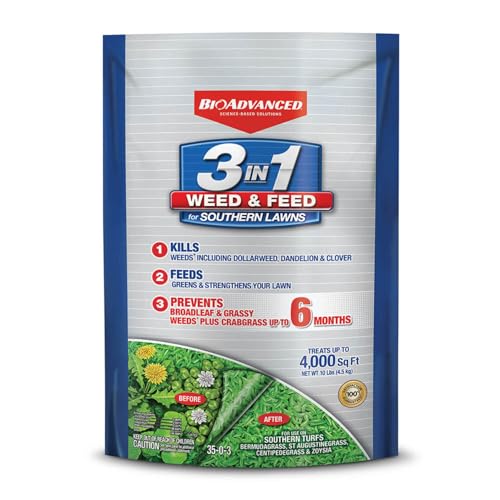
- ✓ Easy to apply
- ✓ Long-lasting weed prevention
- ✓ Boosts lawn color
- ✕ Not suitable for all grass types
- ✕ Needs watering after application
| Application Area | Southern lawns including Bermudagrass and St. Augustinegrass |
| Coverage Area | Approximately 10,000 square feet per 10 lb bag |
| Active Ingredients | Contains fertilizer nutrients and weed control agents (specific chemicals not listed) |
| Application Method | Broadcast or drop spreader |
| Protection Duration | Up to 6 months of weed prevention |
| Target Weeds | Broadleaf weeds such as dandelion, dollarweed, clover, and grassy weeds including crabgrass |
Unlike other weed and feed products I’ve tried, this BioAdvanced 3-in-1 for Southern lawns instantly stood out with its easy-to-sprinkle design and noticeable scent. The granular formula feels coarse but manageable, and I appreciated how evenly it spread with my broadcast spreader.
It’s specially formulated for Bermudagrass and St. Augustine, so I was curious to see how it handled my patchy lawn.
Applying it was straightforward—just a few passes with the spreader, and I could tell the fertilizer was distributing smoothly. The product’s dual action as a weed killer and lawn feeder is impressive; it tackled dandelions and dollarweed quickly, while also giving my grass a vibrant green boost.
What really caught my attention was the claimed six-month weed prevention. I didn’t see any weeds pop up for a good while, which was a relief.
My lawn stayed lush and healthy, even during peak growing season. The fertilizer’s slow-release nature meant I didn’t have to reapply too often, saving me time and effort.
One thing to note is that it’s best used during active growing periods—if the lawn is dormant, results might slow down. Also, I’d recommend watering after application to help the nutrients soak in fully.
Overall, it’s a solid choice for Southern lawns needing an easy, effective weed control and feeding solution.
What Nutrients Are Essential for Outdoor Weed Plants?
The essential nutrients for outdoor weed plants are vital for their growth and development, especially when looking for the best feed for outdoor weed plants.
- Nitrogen (N): Nitrogen is crucial for the growth of foliage and overall plant health. It is an essential component of amino acids, proteins, and chlorophyll, which helps in photosynthesis.
- Phosphorus (P): Phosphorus plays a significant role in energy transfer and photosynthesis. It supports root development and is vital during the flowering stage, enhancing bud growth and yield.
- Potassium (K): Potassium is important for overall plant vigor and stress resistance. It helps regulate water uptake and is essential for the synthesis of proteins and starches, contributing to the plant’s overall health.
- Calcium (Ca): Calcium is necessary for cell wall structure and stability, promoting healthy growth and development. It also aids in nutrient uptake and is essential for root development and enzyme activity.
- Magnesium (Mg): Magnesium is a central component of chlorophyll, which is vital for photosynthesis. It also helps in the activation of various plant enzymes and is important for energy transfer within the plant.
- Sulfur (S): Sulfur is important for the production of amino acids and proteins, contributing to plant metabolism and growth. It also aids in the synthesis of chlorophyll and helps improve the flavor and aroma of the flowers.
- Micronutrients: Micronutrients like iron, manganese, zinc, copper, and boron, while needed in smaller quantities, are essential for various physiological functions. They play key roles in enzyme function, photosynthesis, and overall plant health.
What Types of Feed Can Be Used for Outdoor Weed Plants?
Several types of feed can enhance the growth of outdoor weed plants.
- Organic Fertilizers: Organic fertilizers are derived from natural sources such as compost, manure, or bone meal, providing essential nutrients without the risk of chemical buildup in the soil. They improve soil health by promoting beneficial microbial activity and are generally safer for the environment and plant health.
- Liquid Nutrients: Liquid nutrients are concentrated solutions that can be quickly absorbed by plants, making them ideal for addressing any deficiencies in real-time. They often contain a balanced mix of macronutrients and micronutrients and can be applied through foliar feeding or soil drenching.
- Slow-Release Fertilizers: These fertilizers gradually release nutrients over an extended period, reducing the need for frequent applications. They provide a steady supply of nutrients, which is particularly beneficial during the flowering and fruiting phases of weed plants, promoting robust growth and higher yields.
- Fish Emulsion: Fish emulsion is a liquid fertilizer made from fish waste, known for its rich nitrogen content and trace minerals. It is an excellent feed for outdoor weed plants, especially during the vegetative stage, as it promotes lush green growth and overall plant health.
- Coconut Coir: Coconut coir is a natural fiber extracted from coconut husks, often used as a growing medium that retains moisture and provides some nutrients. While not a traditional fertilizer, it helps improve soil structure and aeration, creating an optimal environment for root development.
- Compost Tea: Compost tea is a nutrient-rich liquid made by steeping compost in water, allowing beneficial microbes and nutrients to leach into the solution. This feed can enhance plant health, stimulate growth, and boost resistance to pests and diseases when applied as a foliar spray or soil drench.
How Does Organic Feed Benefit Outdoor Weed Plants?
- Nutrient-Rich Composition: Organic feed is rich in essential nutrients such as nitrogen, phosphorus, and potassium, which are crucial for the growth stages of weed plants.
- Soil Health Improvement: Using organic feed contributes to the improvement of soil structure and fertility, promoting beneficial microbial activity that supports plant growth.
- Reduced Chemical Exposure: Organic feed minimizes the risk of pesticide and chemical fertilizer residues, ensuring that the plants remain free from harmful substances.
- Enhanced Flavor and Potency: Many growers believe that organic-fed plants produce more flavorful and potent yields, which can enhance the overall quality of the final product.
- Environmental Sustainability: Organic feed practices support sustainable farming by reducing pollution and conserving biodiversity, making them an eco-friendly choice for outdoor growers.
Soil Health Improvement: The use of organic materials such as compost or organic fertilizers can improve soil structure by enhancing its ability to retain moisture and nutrients. This not only benefits the weed plants but also fosters a healthy ecosystem in the soil, promoting beneficial microorganisms that further support plant health.
Reduced Chemical Exposure: By opting for organic feed, growers can significantly reduce the likelihood of chemical build-up in their plants. This is particularly important for outdoor weed plants, as consumers are increasingly seeking organic products that are free from synthetic chemicals.
Enhanced Flavor and Potency: Many cultivators report that plants grown with organic feed tend to have richer flavors and higher potency. The natural growing conditions provided by organic practices can lead to a more complex chemical profile in the plants, resulting in a superior end product.
Environmental Sustainability: Organic feeding practices contribute to environmental health by reducing the negative impacts associated with synthetic fertilizers and pesticides. This approach fosters a more sustainable agricultural system that supports pollinators and other wildlife, promoting biodiversity in outdoor growing environments.
What Are the Pros and Cons of Using Synthetic Feed for Outdoor Weed Plants?
| Aspect | Pros | Cons |
|---|---|---|
| Synthetic Feed | Boosts growth rate, provides balanced nutrients, and is easy to apply. | Can lead to nutrient burn, may disrupt soil microbiome, and could cause chemical buildup. |
| Examples of Synthetic Feed Products | Popular options include Miracle-Gro, FoxFarm Nutrient Trio, and Advanced Nutrients. | Some products may contain harsh chemicals that can be harmful if misused. |
| Long-Term Effects on Plant Health | Can enhance initial growth and yield. | May weaken plants over time, leading to dependency on chemical inputs. |
| Impact on Flavor and Aroma | Can produce high yields. | May alter the natural flavor and aroma of the plants, leading to less desirable taste. |
| Environmental Considerations | Can increase efficiency of nutrient delivery. | May contribute to soil and water pollution if runoff occurs. |
How Does pH Level Affect the Nutritional Intake of Outdoor Weed Plants?
- Optimal pH Range: The ideal pH range for most outdoor weed plants is between 6.0 and 7.0.
- Nutrient Availability: The pH level directly impacts the availability of essential nutrients in the soil.
- Microbial Activity: Soil pH affects the activity of beneficial microorganisms that aid in nutrient absorption.
- Impact on Feeding Strategies: The pH level informs the choice of fertilizers and feeds for outdoor weed plants.
Optimal pH Range: Maintaining a pH level between 6.0 and 7.0 allows for optimal nutrient uptake. If the pH falls outside this range, plants may experience nutrient lockout, where they cannot absorb essential minerals, leading to deficiencies and stunted growth.
Nutrient Availability: Different nutrients become available or unavailable depending on the pH level. For instance, iron and manganese are more available in slightly acidic soils, while calcium and magnesium are more accessible in neutral to slightly alkaline soils, making it crucial to monitor pH for healthy plant growth.
Microbial Activity: Soil pH influences the diversity and activity of soil microbes, which play a vital role in breaking down organic matter and making nutrients available to plants. A balanced pH encourages a thriving microbial community that contributes to soil health and nutrient cycling.
Impact on Feeding Strategies: Understanding how pH affects nutrient availability helps growers select the best feed for outdoor weed plants. Adjusting soil pH through amendments or choosing fertilizers that complement the existing pH can enhance nutrient uptake and improve plant vigor.
How Often Should You Feed Outdoor Weed Plants for Maximum Growth?
Organic feed options, such as compost teas or organic fertilizers, can improve the microbial activity in the soil, enhancing nutrient availability to the plants. Organic feeds also tend to release nutrients more slowly, allowing for a more natural feeding schedule that aligns with the plants’ needs.
Watering considerations are crucial when planning a feeding schedule. Plants that are watered frequently may need nutrients replenished more often, while those in drier conditions may require less frequent feedings to prevent nutrient runoff and ensure absorption.
What Signs Indicate Nutrient Deficiency in Outdoor Weed Plants?
Signs of nutrient deficiency in outdoor weed plants can manifest in various ways, affecting growth and yield.
- Yellowing Leaves: This is often the first sign of a nitrogen deficiency, where older leaves turn yellow while newer growth remains green. Nitrogen is crucial for the production of chlorophyll, and its absence can stunt overall plant growth.
- Brown Tips or Edges: If the tips or edges of the leaves are turning brown, it could indicate a potassium deficiency. Potassium is essential for regulating water use and nutrient transport in plants, and a lack thereof can lead to poor leaf health.
- Stunted Growth: A general lack of growth can signal multiple nutrient deficiencies, particularly phosphorus. Phosphorus is vital for energy transfer and photosynthesis, and without sufficient levels, plants may struggle to develop properly.
- Leaf Curling: When leaves curl upwards or downwards, it may suggest a magnesium deficiency. Magnesium is a key component of chlorophyll and helps in nutrient absorption; without it, plants may exhibit abnormal leaf growth.
- Purple Stems or Leaves: A purple coloration in stems or leaves can indicate a phosphorus deficiency, especially in cooler temperatures. This occurs because phosphorus is less mobile in cooler conditions, leading to a visible deficiency in the plant.
- Spots or Patches on Leaves: Dark spots or patches can be indicative of a calcium deficiency, which is crucial for cell wall structure. A lack of calcium can lead to necrosis and decay of plant tissues, affecting overall health.
- Overall Weakness: If the plant appears weak and spindly, it may be suffering from a lack of multiple nutrients, including nitrogen, phosphorus, and potassium. A well-balanced nutrient profile is essential for robust plant structure and health.
What Are the Best Feeding Practices to Promote Healthy Outdoor Weed Plants?
To promote healthy outdoor weed plants, consider the following best feeding practices:
- Organic Fertilizers: Organic fertilizers like compost, worm castings, and fish emulsion provide essential nutrients while improving soil health. They are slow-releasing, which helps sustain plant growth over time without the risk of nutrient burn that synthetic options might cause.
- NPK Ratios: Understanding and utilizing the correct NPK (Nitrogen, Phosphorus, Potassium) ratio is crucial for different growth stages. For instance, a higher nitrogen ratio is beneficial during the vegetative stage, while a higher phosphorus ratio supports flowering and fruiting phases.
- pH Monitoring: Regularly testing and adjusting the soil pH ensures optimal nutrient availability for the plants. Most weed plants thrive in a slightly acidic to neutral pH of 6.0 to 7.0, so maintaining this balance can significantly improve nutrient uptake and overall health.
- Feeding Schedule: Establishing a consistent feeding schedule helps regulate nutrient supply and aids in preventing deficiencies or excesses. Typically, feeding every 2-4 weeks during the growing season is recommended, adjusting as necessary based on plant response.
- Micronutrients: Incorporating micronutrients such as magnesium, calcium, and iron can enhance plant health and vigor. These elements support various physiological processes and can help prevent common deficiencies that affect growth and yield.
- Watering Practices: Proper watering techniques are essential in conjunction with feeding, as they help dissolve nutrients and make them available to the plants. Ensuring consistent moisture levels without overwatering promotes better nutrient absorption and root health.